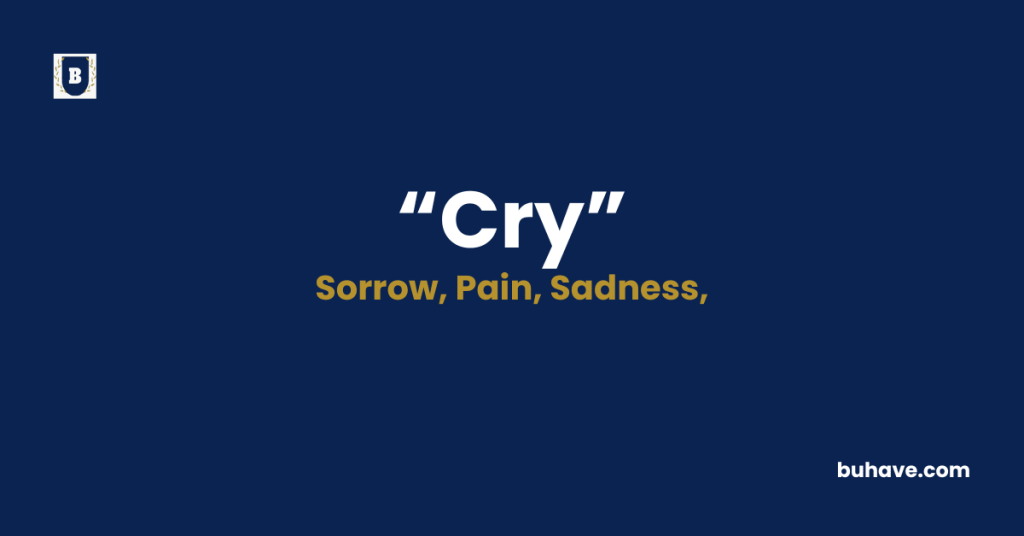
The word Cry (noun/verb) refers to shedding tears—often as an expression of strong emotion like sadness, pain, frustration, or even joy. In this guide, you’ll learn the full definition, synonyms, antonyms, etymology, and real-life examples so you can use Cry correctly in writing and everyday speech.
Cry Explained in Depth
A complete, detailed guide to the word Cry: meaning, definitions, examples, etymology, synonyms, and antonyms.
Meanings of Cry
Cry means to shed tears, typically in response to emotional or physical feelings. It can express grief, frustration, tenderness, or happiness. As a noun, it can also refer to a loud call, shout, or distress sound made by a person or animal.
Definition
Cry is both a verb and a noun. As a verb, it describes the act of weeping or making a loud sound due to emotional or physical experiences. People may cry when overwhelmed by sadness, stress, or relief, and they may also cry in moments of deep happiness or connection.
As a noun, cry can refer to the sound of weeping, a loud exclamation, or a call for help. Crying is a natural human response and a form of non-verbal communication: infants cry to signal hunger or discomfort, while adults may cry due to grief, loss, or intense feelings.
Some cultures view crying as a sign of strength rather than weakness. Emotion also matters here: feelings like sadness and stress can often be communicated through crying when words feel inadequate.
Etymology
The word “cry” originates from Old French crier, meaning “to shout or scream”. That comes from the Latin root quiritare, meaning “to call out or raise a public outcry”. When the term entered English in the Middle English period, it carried meanings connected to shouting, weeping, and emotional expression. Over time, the meaning broadened and became strongly associated with the physical act of shedding tears.
Even today, the word keeps its dual sense of a vocal outburst and an emotional release.
Example Sentences
- The baby began to cry when she was hungry.
- He tried not to cry during the emotional speech, but his voice still wavered.
- After the interview results came in, she let out a cry of joy.
- The documentary reminded her of her grandmother and made her cry in the quietest moment.
Cry Synonyms
Cry Antonyms
- Laugh
- Feel calmly (not a direct opposite word, but often used to contrast emotional reactions)
- Smile
- Cheer
- Rejoice
- Celebrate
- Chuckling
- Grin
- Exult
- Delight
- Beam
FAQs about Cry
Here are some frequently asked questions (FAQs) about the word “Cry”.
1. What does “cry” mean emotionally?
It refers to shedding tears due to strong feelings like sadness, pain, stress, relief, or joy.
2. Is crying a sign of weakness?
No. Crying is a natural emotional response and can reflect empathy, sensitivity, or strength. Many people cry as a way to process overwhelming emotions.
3. Can animals cry?
Some animals make distress sounds, but humans are known for crying emotional tears. Many writers still use “cry” to describe animal sounds in context.
4. Is it healthy to cry?
For many people, yes. Crying can help release emotional tension and reduce stress. If crying is persistent or linked to severe distress, it may be helpful to talk with a qualified professional.