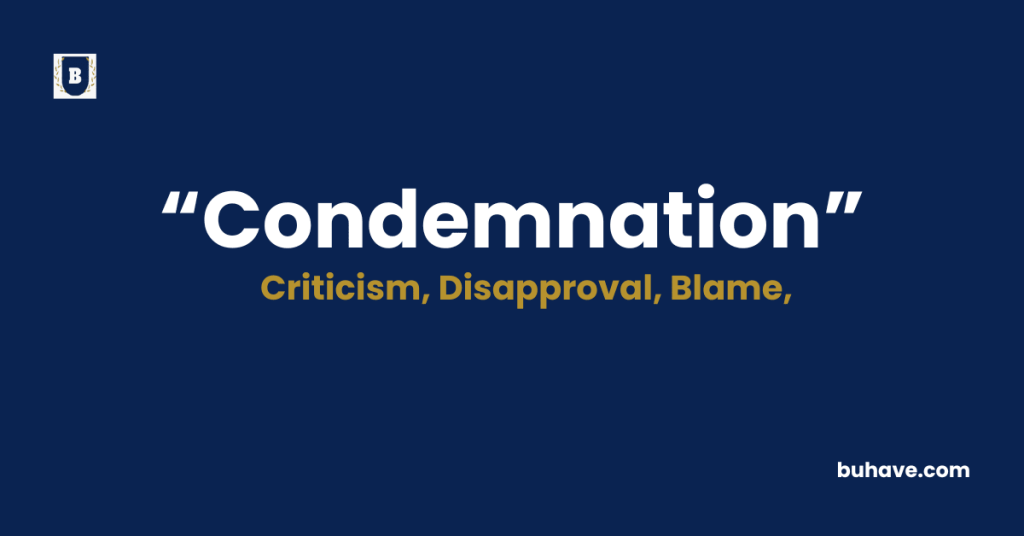
The word ‘Condemnation’ (noun) means the act of expressing strong disapproval—often because someone or something is considered wrong, harmful, or blameworthy. It can appear in everyday speech, in professional writing, and in formal settings such as legal or public statements. In this guide, you’ll explore the full meaning, origin, and proper usage of ‘Condemnation’ in modern English.
Condemnation Explained in Depth
A complete and detailed guide to the word ‘Condemnation’ including meaning, definition, examples, etymology, synonyms, and antonyms.
Meanings of Condemnation
‘Condemnation’ means declaring something to be wrong, evil, unsafe, or unacceptable. Depending on context, it can refer to public censure, moral disapproval, or an official judgment (for example, a court finding someone liable).
Definition
‘Condemnation’ is the expression of strong disapproval; pronouncing someone or something as blameworthy, especially in a serious, formal, or public way.
Etymology
The word “Condemnation” comes from Latin condemnatio, meaning “a sentencing” or “conviction,” derived from condemnare—“to sentence, blame, or disapprove.” It entered English through Old French in the Middle Ages, and it has long been used in contexts involving formal judgment as well as moral criticism.
Example Sentences
- The city council issued a statement of condemnation against the violent protests.
- Her decision drew widespread condemnation from both the public and investigative journalists.
- The court’s condemnation of the misconduct led to a significant penalty and years of supervision.
Condemnation Synonyms
- Denounce
- Censure
- Rebuke
- Disapproval
- Blame
- Disapproval
- Reproach
- Reprimand
- Judgment
- Convict
Condemnation Antonyms
- Praise
- Approval
- Endorsement
- Support
- Acceptance
- Compliment
- Acquittal
- Recognition
- Commendation
- Sanction
FAQs about Condemnation
Here are some frequently asked questions (FAQs) about the word “Condemnation”
1. What does “condemnation” actually mean?
“Condemnation” is the act of expressing strong disapproval or declaring someone or something wrong, unsafe, or blameworthy.
2. Is condemnation always negative?
In most cases, yes. Condemnation involves negative judgment—criticism or punishment—whether moral, social, or legal.
3. How is condemnation used in law?
In legal contexts, “condemnation” can refer to a formal conviction, and it can also describe official processes where the government takes private property for public use (often discussed in relation to eminent domain).
4. Is condemnation different from criticism?
Yes. Criticism can be mild, constructive, or aimed at improvement, while condemnation is usually harsh and absolute, signaling strong disapproval.
5. Can a person self-condemn?
Yes. People often self-condemn when they experience deep guilt or shame about decisions or actions.
Related usage: condemnation vs. contempt
It’s easy to mix up condemnation with contempt. Condemnation focuses on judging an action, decision, or behavior as wrong; contempt is more about disrespect or feeling that someone is beneath you.