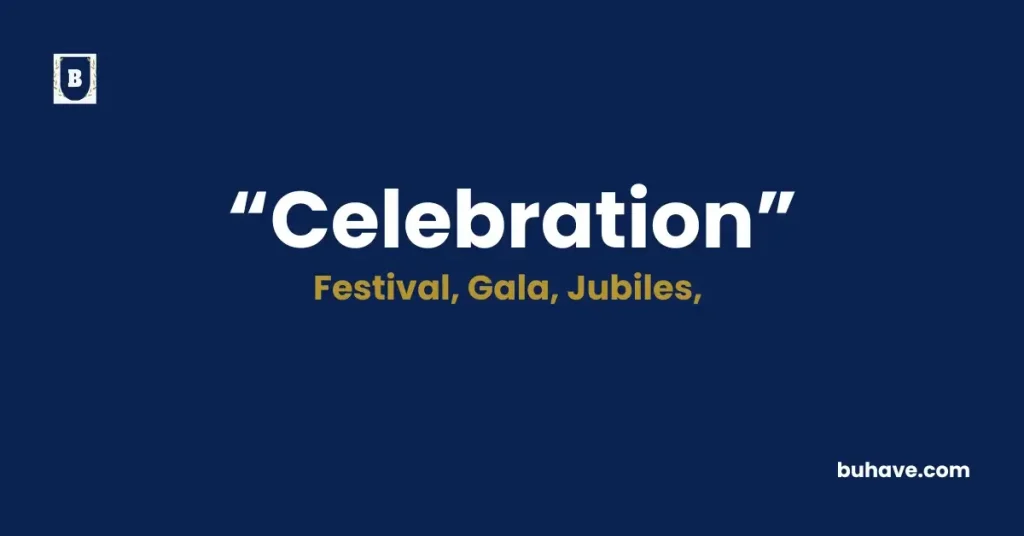
The word ‘Celebration’ (noun) means an occasion or event marked by joy—often to honor an achievement, milestone, or meaningful moment. In this guide, you’ll learn the full definition, synonyms, antonyms, etymology, and real-life examples of how to use ‘Celebration’ correctly in sentences.
Celebration Explained in Depth
A complete and detailed guide to the word ‘Celebration’ including meaning, definition, examples, etymology, synonyms, and antonyms.
Meanings of Celebration
Celebration refers to an event or act of rejoicing, usually marked by festivities, happiness, and social gathering. It can involve parties, ceremonies, public observances, or simply the acknowledgment of a meaningful moment such as a birthday, wedding, victory, graduation, retirement, or a cultural holiday. Celebration often brings people together to share joy, express gratitude, and recognize significant milestones—sometimes with music, food, rituals, or symbolic gestures.
Definition
Celebration is a noun that means the action of marking a special occasion or achievement with joyful activities, festivities, or social gatherings. It’s a way to express happiness, appreciation, and unity, and it can be as formal or traditional as a ceremony or as simple as a quiet dinner with loved ones. If you’re looking for a verb, you may also want to review how to use ‘celebrate’ in everyday sentences.
Etymology
The word “celebration” comes from the Latin word celebratio, meaning “to frequent, to honor, or solemnize.” It developed in Middle English (via Old French) to describe the act of observing a special occasion with festivity and joy. The Latin root celebrare means “to honor or glorify,” and over time the meaning expanded beyond religious ceremonies to include personal milestones, civic events, and cultural festivities.
Example Sentences
- The family held a big celebration for her graduation and invited friends from work.
- After the team’s victory, there was a city-wide celebration with parades, food stalls, and music.
- The annual festival is a celebration of local art and culture, featuring live performances and craft workshops.
- We kept the celebration low-key since most guests had early morning schedules.
- Her promotion was met with an unexpected celebration in the office.
Celebration Synonyms
- Rejoicing
- Festivity
- Party
- Ceremony
- Observance
- Commemoration
- Jubilation
- Gathering
- Festival
- Feast
- Honoring
Celebration Antonyms
- Mourning
- Grieving
- Sorrow
- Condemnation
- Despair
- Sadness
- Disregard
- Neglect
- Forgetfulness
- Ignorance
FAQs about Celebration
Here are some frequently asked questions (FAQs) about the word Celebration.
1. What does “celebration” actually mean?
“Celebration” means an event or act where people come together (or mark a moment) to acknowledge an achievement, special occasion, or milestone with joy and festivity.
2. Can “celebration” describe both big and small events?
Yes. Celebration can describe anything from a large public festival to a quiet family dinner marking a birthday, anniversary, graduation, or retirement.
3. Is “celebration” always positive?
Generally, yes. The word usually carries a happy, optimistic tone because it’s meant to express joy and appreciation. In writing, however, the phrase may appear in context that contrasts joy with something painful (for example, “a celebration after a difficult year”).
4. Can “celebration” be used in a formal context?
Absolutely. “Celebration” works in formal writing, such as “the celebration of the nation’s independence” or “a formal celebration of outstanding community service.”
5. How is “celebration” different from “rejoicing”?
While both relate to happiness, “celebration” often points to a specific occasion or event. “Rejoicing” more directly describes the feeling of joy (and may be used with or without a formal event). If you want the nuance between feeling and event, see rejoicing’s full meaning and usage.