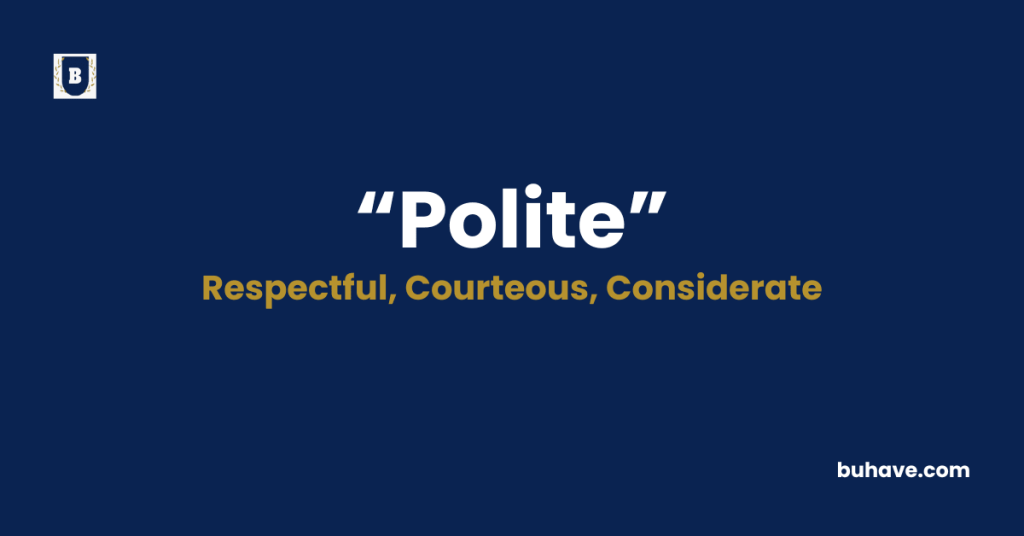
The word ‘Polite’ (adjective) describes someone who shows good manners, courtesy, and respect in both speech and behavior. In this guide, you’ll learn the full definition, synonyms, antonyms, etymology, and real-life examples of how to use ‘polite’ correctly in everyday sentences.
Polite Explained in Depth
A clear, practical guide to the word polite, including meaning, definition, etymology, synonyms, antonyms, and example sentences you can use in everyday and professional communication.
Meanings of Polite
The word polite refers to behavior that reflects respect, courtesy, and tact in interactions with others. When someone is polite, they show awareness of other people’s feelings, needs, and boundaries. This often includes using phrases such as “please” and “thank you,” waiting one’s turn, listening without interrupting, and acknowledging others with appropriate eye contact or a greeting. In many settings, politeness helps people communicate more smoothly, reduces friction, and prevents unnecessary misunderstandings.
Being polite does not necessarily mean being overly formal or distant. It usually means being considerate in everyday situations, whether at home, in public, in school, or at work.
In modern settings, politeness also shows up in how we communicate through messages and meetings. Polite wording can help people disagree respectfully, and polite tone choices can make requests feel clear rather than demanding. Many schools and families teach politeness early because it supports social development, and that habit often carries into adulthood as part of someone’s character.
From small gestures, like holding a door open, to more complex moments, like offering calm feedback, being polite can change the tone of a conversation—often making it easier for others to feel heard and respected.
Definition
Polite is defined as showing or expressing respect for others in speech or behavior—acting in a socially appropriate, considerate, and well-mannered way. It suggests an intentional effort to be civil and gracious, even when a situation is tense, rushed, or unfamiliar.
In practical terms, being polite often includes using courteous language, showing appreciation, exercising patience, and being mindful of other people’s time and space. For example, a polite person might hold the door open, avoid interrupting while someone is speaking, and respond calmly instead of reacting with anger in a disagreement. While cultural norms can affect what counts as “polite,” the guiding idea is widely consistent: treating others with dignity and care. In professional and personal contexts, politeness helps build credibility, supports teamwork, and makes conversations more productive.
Etymology
The etymology of “polite” connects to the idea of refinement. The word comes from the Latin politus, the past participle of polire, meaning “to polish” or “to make smooth.” In its earliest sense, it described something refined and made smoother—and over time, the meaning expanded from physical polish to personal conduct. As societies increasingly valued manners, the term began to describe people whose behavior and social interactions were refined.
It entered Old French as polir and Middle English as polite, initially keeping the sense of smoothness and elegance. By the 17th and especially the 18th centuries, “polite” was widely used to describe cultured, well-bred people and the ideals of what many texts referred to as polite society. Today, the word still reflects that original idea: polishing social interactions so they feel less rough and more respectful.
Example Sentences
- He always speaks in a polite tone, even when the customer is upset.
- She was polite enough to wait until everyone had been served before eating.
- The interviewer appreciated how polite the candidate was during the interview.
- Even though he disagreed, he stayed polite and respectful in his response.
- They wrote a polite message to the landlord requesting repairs and a timeline.
Polite Synonyms
- Courteous
- Respectful
- Civil
- Gracious
- Well-mannered
- Considerate
- Tactful
- Well-behaved
- Gallant
- Refined
Polite Antonyms
- Rude
- Impolite
- Disrespectful
- Insolent
- Ill-mannered
- Uncivil
- Brash
- Discourteous
- Blunt
- Obnoxious
FAQs about Polite
Here are some frequently asked questions (FAQs) about the word polite.
1. What does “polite” mean in simple terms?
Being polite means treating others with respect and good manners in both what you say and how you behave.
2. Can politeness vary across cultures?
Yes. Different cultures have different expectations for what counts as respectful behavior, from greetings to how directly people communicate.
3. Is politeness important in the workplace?
Absolutely. Being polite at work supports a positive environment, improves teamwork, and helps reduce misunderstandings during meetings and everyday interactions.
4. What are some examples of polite behavior?
Saying “please” and “thank you,” listening attentively, not interrupting, and apologizing when you’ve made a mistake are all examples of polite behavior.
5. Can being polite make a difference in relationships?
Yes. Politeness strengthens mutual respect and trust, and it often leads to clearer, calmer communication—especially during disagreements.
6. Is politeness the same as kindness?
Not exactly. Politeness is about manners and respect in behavior and speech, while kindness is about genuine care and compassion. However, they often overlap and can reinforce each other.
7. Can politeness be taught?
Yes. People learn politeness through modeling, feedback, and practice—whether as children, students, new employees, or anyone adapting to a new culture or workplace.
Explore more P words
Positive words that start with P
Negative words that start with P
Names that start with P
Nouns that start with P
Verbs that start with P