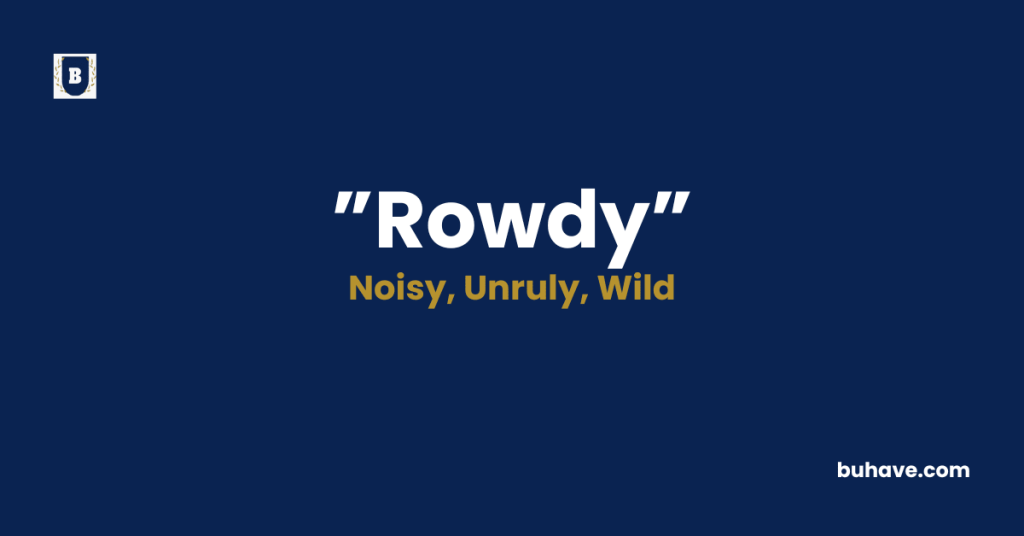
The word Rowdy (adjective) describes noisy, rough, and disorderly behavior—often disruptive in a group setting. In this guide, you’ll learn the full definition, synonyms, antonyms, etymology, and real-life examples of how to use Rowdy correctly in sentences.
Rowdy Explained in Depth
A complete and practical guide to the word Rowdy, including meaning, definition, usage examples, etymology, synonyms, and antonyms.
Meanings of Rowdy
Rowdy means noisy and disruptive, often with boisterous behavior that suggests a lack of self-control. Depending on context, it can describe crowds, children, or events where people are loud, unruly, or difficult to manage.
Definition
Rowdy refers to loud, disorderly, and often unruly behavior that can disturb others or interrupt peace and normal activity. It usually implies limited restraint, especially in public or social settings.
Etymology
The word rowdy entered American English in the early 19th century, likely influenced by meanings related to “rough” or “row” (a noisy disturbance). Early uses described rough or disorderly people—sometimes connected to street groups or noisy gathering places.
Example Sentences
- The rowdy crowd outside the venue made it hard to hear the announcements.
- Rowdy students disrupted the workshop with nonstop shouting and interruptions.
- Security was called when a group of rowdy fans began pushing near the seats.
- Despite the rowdy atmosphere, the game stayed friendly and nobody got hurt.
Rowdy Synonyms
- Boisterous (boisterous)
- Noisy (noisy)
- Rambunctious
- Unruly
- Disruptive
- Loud
- Rough
- Chaotic
- Wild
- Turbulent
- Raucous (raucous meaning definition synonyms and antonyms)
- Clamorous (clamorous meaning definition synonyms and antonyms)
Rowdy Antonyms
- Quiet
- Orderly
- Calm
- Peaceful
- Disciplined
- Serene
- Restrained
- Silent
- Well-behaved
- Subdued
- Composed
FAQs about Rowdy
Here are some frequently asked questions (FAQs) about the word Rowdy.
1. What does “rowdy” mean?
It means noisy, unruly, and disruptive, especially in public or group settings.
2. Is “rowdy” always used negatively?
Often yes, but it can also describe energetic, spirited fun when the situation is lighthearted and not harmful.
3. Is “rowdy” a formal word?
It’s mostly informal and is commonly used in conversation, news, and casual writing.
4. What’s the difference between “rowdy” and “reckless”?
Rowdy focuses on loudness and disorder. Reckless focuses on acting without thinking about consequences. A person can be rowdy without being reckless.
Explore more R words
- Positive words that start with R
- Negative words that start with R
- Names that start with R
- Nouns that start with R
- Verbs that start with R
Similar Words (Quick Context)
If you’re choosing a synonym for rowdy, these nearby word choices can help you match the exact tone:
| Word | Typical meaning | Example idea |
|---|---|---|
| Raucous | Loud, harsh, and disorderly sound | A raucous crowd chanting |
| Boisterous | Lively and loud energy, sometimes slightly uncontrolled | Boisterous laughter at a party |
| Noisy | Makes a lot of sound; may be disruptive but not always unruly | Noisy construction nearby |
| Reckless | Dangerous or careless choices without considering consequences | Reckless driving behavior |
| Rude | Impolite or disrespectful behavior | Rude comments during a conversation |