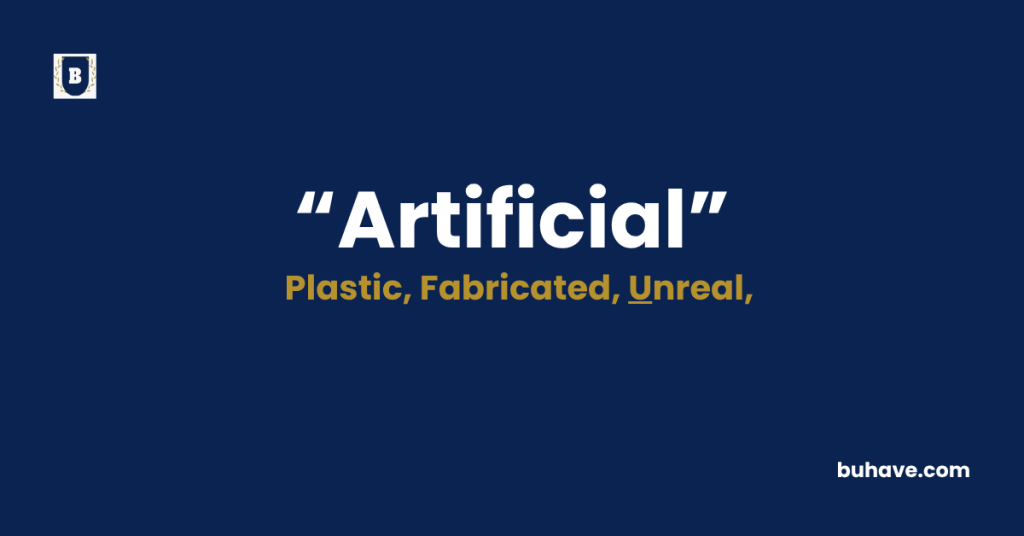
The word Artificial (adjective) describes something made or produced by humans rather than occurring naturally. It can also describe behavior or emotions that seem insincere or contrived. In this guide, you’ll learn the full definition, synonyms, antonyms, etymology, and real-life examples of how to use Artificial correctly in sentences.
Artificial Explained in Depth
A complete, beginner-friendly guide to the word Artificial, including its meanings, definition, etymology, example sentences, synonyms, antonyms, and common usage in everyday writing.
Meanings of Artificial
It can apply to objects or environments (like artificial lakes), or even to human behavior (such as artificial smiles). The word can carry neutral, positive, or negative connotations depending on the context.
Definition
Artificial describes anything created through human skill or intervention rather than occurring in the natural world. In many contexts, it refers to items designed to imitate something found in nature, such as artificial light, artificial flavor, or artificial turf. In emotional or behavioral contexts, artificial may suggest a lack of sincerity or authenticity, especially when someone acts in a forced, overly polished, or insincere way. The term is also widely used in technology and science, particularly in phrases like “artificial intelligence,” which refers to computer systems designed to mimic certain human abilities like perception, reasoning, and decision-making. While artificial materials and environments can offer convenience, cost-effectiveness, or durability,
they are sometimes viewed as inferior or less desirable than their natural counterparts. When used to describe people or emotions, it usually has a critical or disapproving tone.
Etymology
The word artificial comes from the Latin artificialis, meaning “made by art,” from artificium—a combination of ars (art) and facere (to make). Historically, the original sense emphasized craftsmanship and skilled making. The word entered Middle English in the 14th century, and its meaning broadened over time to include both literal and figurative uses.
In modern usage, it often contrasts with natural, especially in science, food, and discussions about authenticity. While artificial can acknowledge human ingenuity, it can also criticize the lack of authenticity in behavior, appearance, or product quality.
Example Sentences
- The stadium was illuminated with artificial light after sunset when the event ran late.
- Her apology sounded artificial, so he wasn’t sure she meant it.
- In the lab, the researchers tested whether artificial conditions changed the results.
- Artificial intelligence is reshaping how many organizations handle data and automation.
Artificial Synonyms
Artificial Antonyms
FAQs about Artificial
Here are some frequently asked questions (FAQs) about the word “Artificial.”
1. Is “artificial” always negative?
No. Artificial can be practical or even beneficial in science and technology, but it may sound negative when describing insincerity, imitation, or something that feels not genuinely made.
2. What are examples of artificial items?
Common examples include artificial sweeteners, artificial grass, artificial limbs, and artificial light used indoors or at night.
3. How is “artificial” used in emotional contexts?
It describes behavior that appears fake or insincere, such as an artificial smile, a rehearsed compliment, or an overly formal tone that doesn’t match someone’s real feelings.
4. What’s the difference between “artificial” and “synthetic”?
They overlap often, especially for products. However, “synthetic” is more technical and is commonly used for materials made from chemical processes, while “artificial” can also include broader meaning about imitating nature or lacking authenticity.