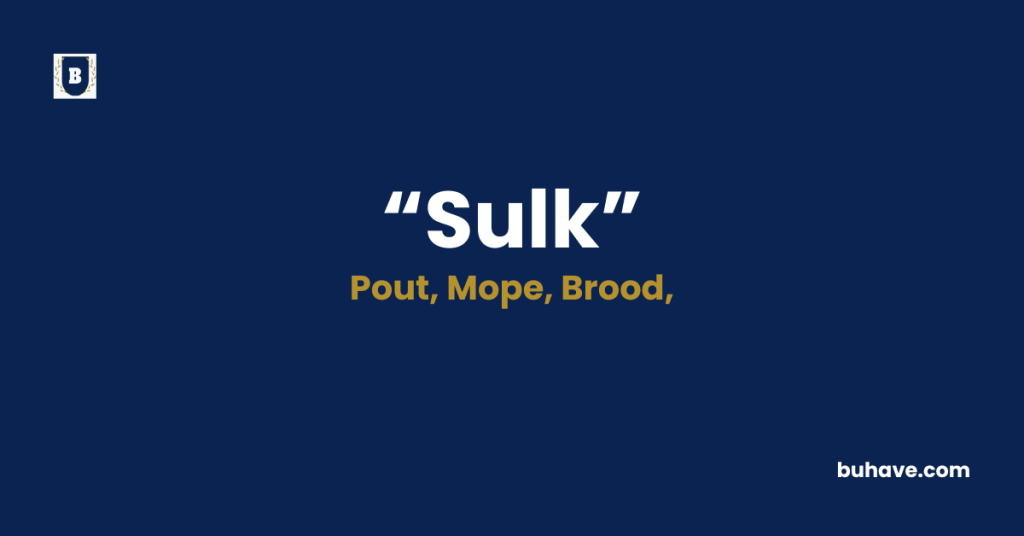
The word Sulk (noun) refers to a period of silence and visible displeasure when someone feels upset, disappointed, or annoyed. In this guide, you’ll learn the full definition, synonyms, antonyms, etymology, and real-life examples of how to use “sulk” correctly in sentences.
Sulk Explained in Depth
A complete and detailed guide to the word Sulk, including meaning, definition, examples, etymology, synonyms, and antonyms—plus practical guidance for using it in everyday writing.
Meanings of Sulk
Sulk means to withdraw or remain quiet due to unhappiness, disappointment, or irritation. It is often a passive form of expressing displeasure or resentment.
Definition
Sulk refers to a behavior where a person becomes quiet and visibly upset without openly communicating their feelings. This often happens after a disagreement, disappointment, or perceived unfairness. Someone who sulks may avoid eye contact, stay silent, or isolate themselves. Sulking can be short-lived or prolonged. Children often sulk when denied a toy, but adults may also sulk after an argument, in response to criticism, or when plans don’t go as expected.
It is not always intentional. Sometimes people sulk as a coping mechanism, especially when they feel hurt or overwhelmed. In those cases, the response may be subtle and not look like “anger” on the surface. While sulking can alert others that something is wrong, it doesn’t foster healthy communication. Over time, repeated sulking can affect relationships and create misunderstandings. If you’re describing a quieter emotional state, you may also find it helpful to compare “sulk” with gloom and sadness.
Etymology
The word “sulk” comes from the 18th-century English dialect term “sulky,” which described someone who was sullen or bad-tempered. Earlier usage is unclear, but it is believed to have Scandinavian roots, possibly related to Norwegian dialect words like surke (to be grumpy). By the 19th century, “to sulk” became commonly used in English to describe a moody, withdrawn state. The noun form “a sulk” refers to the act itself or a period of sulking. Over time, sulking became a recognized emotional reaction, not just in literature but also in discussions of indirect communication and interpersonal conflict.
Example Sentences
- He began to sulk after being left out of the decision.
- She sat in a corner and sulked for the rest of the evening.
- The child went into a sulk when he didn’t get his way.
- After the meeting, he kept quiet and sulked instead of asking clarifying questions.
Sulk Synonyms
Sulk Antonyms
- Cheer
- Smile
- Engage
- Communicate
- Express
- Open up
- Laugh
- Interact
- Brighten
- Be friendly
FAQs about Sulk
Here are some frequently asked questions (FAQs) about the word “Sulk.”
1. What does it mean when someone is sulking?
It means they are silently showing unhappiness or irritation, usually after something upset them, while avoiding direct conversation.
2. Is sulking healthy?
Occasional sulking can happen when people feel hurt, but frequent sulking can harm relationships if feelings go unexpressed. A healthier alternative is to communicate what’s bothering you.
3. Do only children sulk?
No. Adults may sulk too, often more subtly—like going quiet after feedback or avoiding conversation during conflict.
4. What’s the difference between sulking and being sad?
Sulking often has a passive-aggressive element: silence and withdrawal directed at the situation or other people. Sadness may be more internal and can be expressed openly.
5. Can sulking be unintentional?
Yes. People may sulk without realizing, especially when they’re overwhelmed by emotion or don’t know how to express hurt constructively.