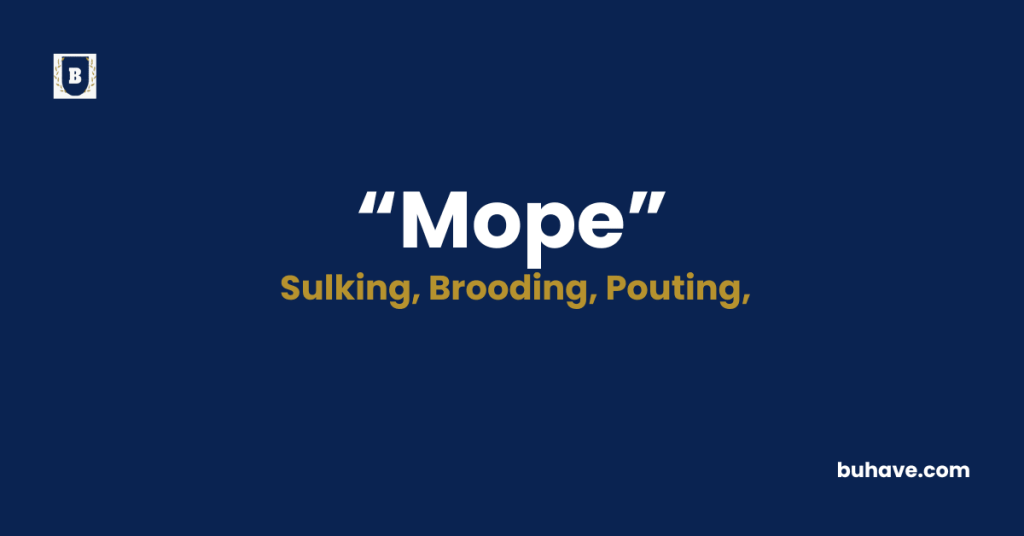
The word mope (verb) means to act in a sad, sluggish, or sulky way. In this guide, you’ll learn the full definition, synonyms, antonyms, etymology, and real-life examples of how to use “mope” correctly in sentences.
Mope Explained in Depth
A clear, practical guide to the word mope—including meaning, definition, usage examples, etymology, synonyms, and antonyms.
Meanings of Mope
Mope means to behave in a gloomy, low-energy way, often because of sadness, disappointment, boredom, or frustration. It usually involves sulking, withdrawing, or moving and speaking more slowly than usual.
Definition
Mope refers to a state of sadness or low spirits that shows up through a person’s actions. Someone who mope s might walk slowly, speak less, avoid eye contact, or pull away from activities. This behavior can be common in children after a scolding, but adults may also mope during stressful times or after setbacks. In everyday conversation, “mope” often describes a temporary emotional withdrawal—someone might mope after missing an event, losing a game, or dealing with disappointing news.
The word also appears in literature and media as a shorthand for emotional letdown: it communicates discontent quietly, without dramatic outbursts. While it can sound minor, chronic or severe moping can be a sign that a person needs support.
Etymology
The word “mope” entered English in the 16th century, and it traces back to the Low German verb moppen, meaning “to sulk” or “to pout.” Over time, the sense in English shifted toward listless, emotionally dull behavior—especially the kind of sadness that shows up physically (slowness, withdrawal, and lack of engagement). Earlier uses could carry broader negative meanings, but the modern meaning focuses on low spirits and reduced motivation. Writers have long used “mope” to depict inner sorrow and childish sulking, and today it still works well in both casual conversation and more descriptive writing.
Example Sentences
- After losing the game, he just sat in the corner and moped.
- She moped around the house all day, missing her friends and checking her phone repeatedly.
- There’s no need to mope—you’ll get another chance soon.
- At work, he started to mope after the project was delayed, but he eventually asked for clearer priorities.
Mope Synonyms
- Sulk
- Brood
- Pout
- Fret
- Whine
- Languish
- Gloom (as a mood)
- Melancholy (as a state of mind)
- Drift
- Be down
Mope Antonyms
- Cheer up
- Brighten
- Celebrate
- Rejoice
- Laugh
- Smile
- Perk up
- Enjoy
- Be lively
- Be upbeat
FAQs about Mope
Here are some frequently asked questions (FAQs) about the word mope.
1. What does “mope” mean in behavior?
It means to show sadness or disappointment through sluggish actions, withdrawal, and a general lack of energy.
2. Is moping a sign of depression?
It can be. Occasional moping is normal, but persistent low mood, loss of interest, or ongoing withdrawal may be a sign that someone needs additional help or support.
3. Can children mope?
Yes. Children often mope after being told “no,” after losing, or when they feel left out.
4. Is mope a negative word?
It’s neutral to slightly informal, but it can sound dismissive if you use it to minimize someone’s real feelings.
5. How can someone stop moping?
Talking to someone you trust, engaging in a small enjoyable activity, getting some movement or fresh air, and addressing what’s bothering you can all help.