The word Discourage (Verb) means to make someone feel less hopeful, less confident, or less motivated to do something—often due to criticism, obstacles, or negative feedback. In this guide, you’ll learn the full definition, synonyms, antonyms, etymology, and real-life examples of how to use Discourage correctly in sentences.
Discourage Explained in Depth
A complete and detailed guide to the word Discourage including meaning, definition, examples, etymology, synonyms, and antonyms.
Meanings of Discourage
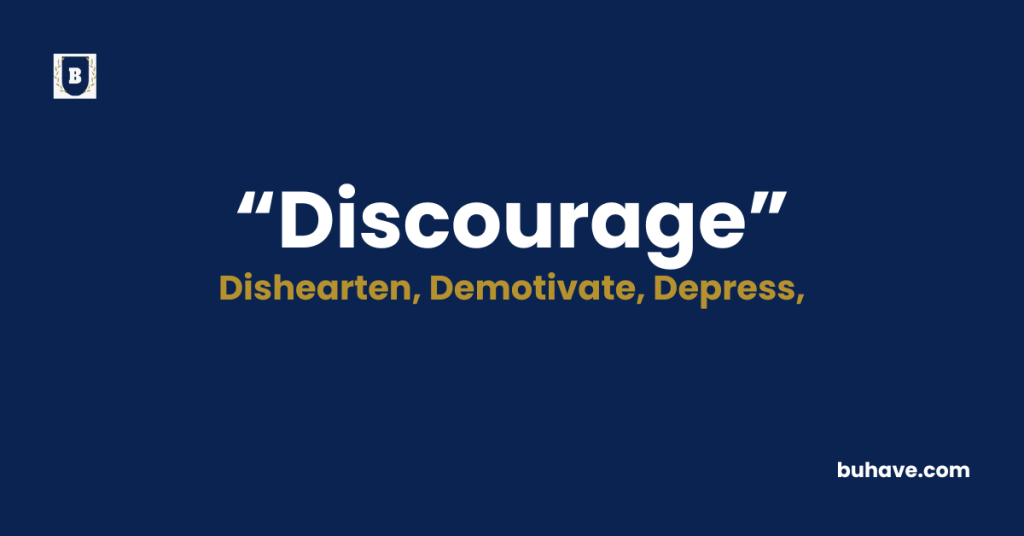
Discourage means to cause someone to lose enthusiasm, confidence, or determination, often leading them to give up on an effort or goal. It can also mean to dissuade someone from doing something by presenting negative consequences or expressing disapproval—similar to the way disapproval can make a person feel judged or held back.
Definition
Discourage is a verb that describes the act of lowering someone’s motivation, hope, or willingness to continue. It can occur through external actions such as criticism, rejection, or lack of support, or through internal feelings like fear or self-doubt. When someone is discouraged, they often feel defeated, hesitant, or unworthy of success. The term can also be used to describe intentional efforts to prevent certain behaviors or actions, such as discouraging risky decisions or bad habits.
Discouragement isn’t always malicious—sometimes it’s meant to keep someone safe or steer them away from unwise choices. However, it can still become harmful if it’s overly harsh, vague, or applied without context. When you’re tempted to discourage someone, it can help to consider how to redirect the conversation instead—especially using language that encourages rather than discourages.
Etymology
The word discourage comes from the Old French descouragier, formed from des- (meaning “away, off, or reversal”) plus corage (meaning “courage” or “heart”). It entered Middle English as discouragen in the 14th century. Literally, “discourage” means “to take away courage.” Over time, the meaning expanded to include reducing motivation, confidence, or interest in an action or goal—an emotional and psychological idea that still fits everyday conversations, classrooms, workplaces, and online feedback today.
Example Sentences
- The negative feedback discouraged her from submitting another article.
- We should never discourage children from asking questions or being curious.
- His constant criticism discouraged the team and lowered morale.
- Even minor setbacks can discourage beginners, so it helps to share realistic progress timelines.
Discourage Synonyms
- Demotivate
- Dishearten
- Dishearten
- Depress
- Daunt
- Prevent
- Restrain
- Hinder
- Suppress
- Shake confidence
Discourage Antonyms
- Encourage
- Inspire
- Motivate
- Support
- Cheer
- Uplift
- Reassure
- Boost
- Promote
- Embolden
FAQs about Discourage
Here are some frequently asked questions (FAQs) about the word “Discourage”
1. What does “discourage” mean?
It means to make someone lose motivation, confidence, or hope to do something.
2. Is discouraging always a negative thing?
Not always. Sometimes people discourage actions that are unsafe or unwise, but tone and intention matter. Poorly worded guidance can still discourage even when the goal is to help.
3. Can someone discourage themselves?
Yes. Internal doubts, fear of failure, or past experiences can lead a person to feel discouraged without outside influence.
4. What’s the opposite of discourage?
Encourage—giving someone support, confidence, or hope to continue or try something new. In practice, encouragement often also helps clarify expectations and reduce unnecessary anxiety, similar to how dispel can remove uncertainty.
5. How can I avoid discouraging others?
Use kind words, give constructive feedback, and focus on actionable next steps. If someone is disappointed or surprised by results, you can address the moment without turning it into a personal judgment—especially when the situation is disappointing but still workable.