Table of Contents
Enmity – Meaning, Definition, Synonyms and Antonyms
Enmity is used as a Noun in English grammar. It describes deep, lasting hostility between people or groups.
Meaning:
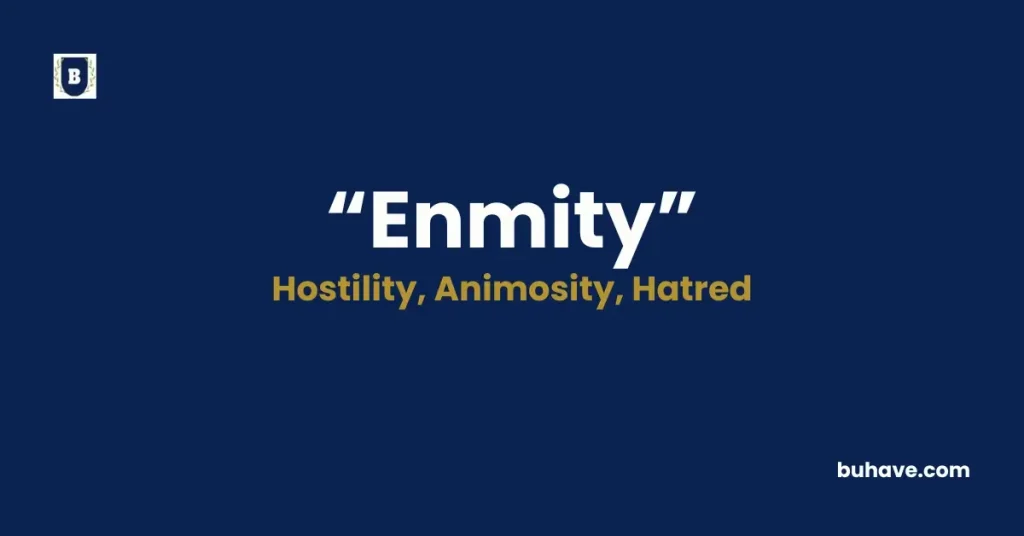
Enmity refers to a deep-seated hostility or animosity. Unlike brief dislike, it implies a sustained, often emotionally driven resentment that can shape relationships and lead to open conflict.
If you are learning related vocabulary, hostility is a close match, while hatred emphasizes strong emotional dislike.
Definition:
Enmity can arise from personal grievances, ideological differences, competition, or historical disputes. It is typically more intense and enduring than mere dislike, and it often describes conflict that remains unresolved for a long time.
The word is also commonly used in formal writing (news, essays, history) to describe tensions between nations, communities, or groups, similar to embitter (the act of making someone resentful).
Example Sentences:
- The long-standing enmity between the two rival families prevented any real chance of reconciliation.
- Over time, their enmity grew, fueled by misunderstandings and ongoing competition.
- Despite their enmity, they still had to work together to meet the project deadline.
- The peace treaty was signed in hopes of ending centuries of enmity between the nations.
- During the debate, the candidates’ enmity became obvious in the way they spoke about each other’s policies.
Enmity Synonyms:
Enmity Antonyms:
- Amicably (in an agreeable way)
- Friendship
- Amity
- Harmony
- Alliance
- Goodwill
- Cooperation
- Mutual respect
Explore more Positive words that start with E to balance your vocabulary with contrast terms for writing and conversation.
If you’re comparing intensity, you may also find hostile helpful, since it describes behavior or attitudes that show active opposition.