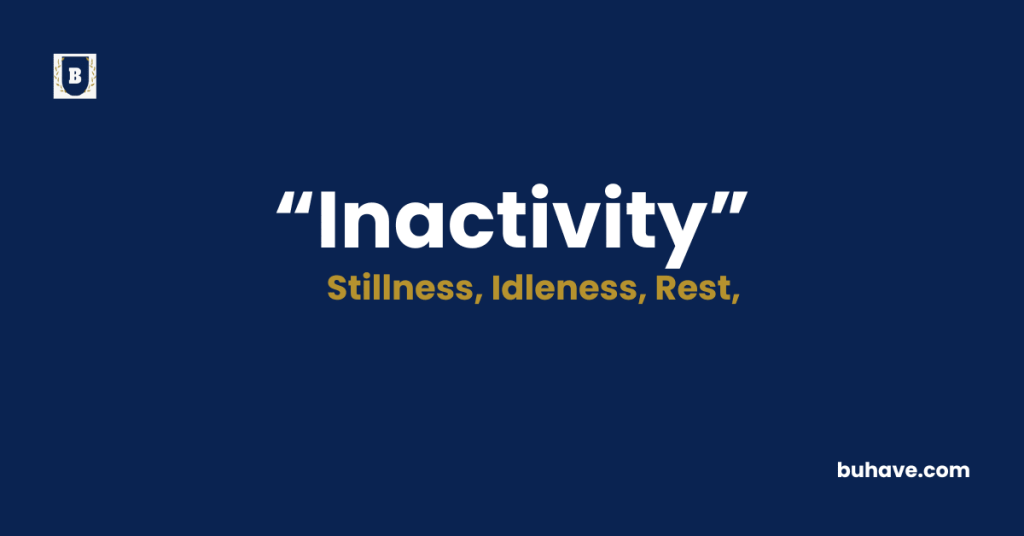
The word ‘Inactivity’ (noun) refers to the state of being inactive, still, or not engaging in physical or mental activity. In this guide, you’ll learn the full definition, synonyms, antonyms, etymology, and real-life examples of how to use ‘Inactivity’ correctly in sentences.
Inactivity Explained in Depth
A complete and detailed guide to the word Inactivity, including meaning, definition, examples, etymology, synonyms, and antonyms.
Meanings of Inactivity
‘Inactivity’ refers to a lack of action or movement. It often describes a state where no progress is being made, either physically, mentally, or functionally. It can also relate to a sedentary lifestyle, a paused process, or a period of rest.
Definition
Inactivity (noun): the state of being inactive; absence of physical or mental activity; lack of action or movement.
Etymology
The term ‘inactivity’ combines the prefix “in-” meaning “not” with the Latin root “activus,” meaning “doing” or “energetic.” It entered English in the 17th century to describe the condition of being motionless, idle, or not actively engaged.
Example Sentences
- Prolonged inactivity can contribute to muscle weakness and increased health risks.
- The company reported losses after months of financial inactivity.
- After his injury, he experienced a period of enforced inactivity.
- Inactivity during quarantine affected many people’s routines and mental well-being.
- The volcano’s inactivity lasted for more than a century before it erupted again.
Inactivity Synonyms
Inactivity Antonyms
- Active
- Movement
- Action
- Exercise
- Work
- Engagement
- Operation
- Vigor
- Motion
FAQs about Inactivity
Here are some frequently asked questions (FAQs) about the word “Inactivity”.
1. Can inactivity affect health?
Yes. Physical inactivity is linked to numerous health risks, including cardiovascular disease, metabolic issues, and reduced overall fitness. For many people, it also affects energy levels and mood.
2. Is inactivity the same as rest?
Not exactly. Rest is often purposeful and restorative, while inactivity can be unintentional or unproductive.
3. What’s the difference between inactivity and inaction?
Inactivity is usually about a lack of movement or engagement over time, while inaction often emphasizes a failure to take steps when action is expected.
4. How can someone overcome chronic inactivity?
Starting small helps: add short, consistent movement breaks; set realistic goals; and reduce long stretches of sedentary time. If inactivity is linked to pain or a medical condition, it’s also wise to seek guidance from a healthcare professional.