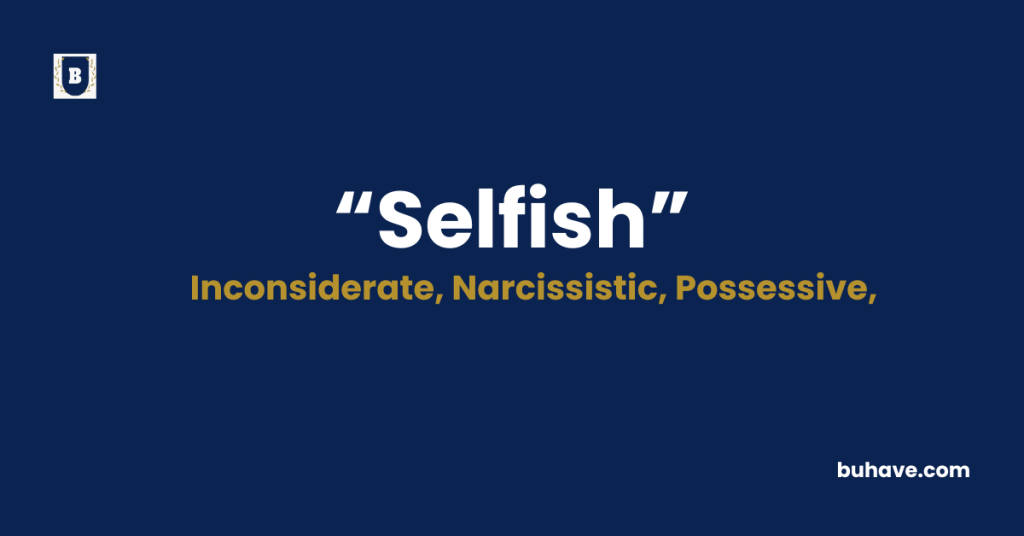
The word ‘Selfish’ (adjective) describes someone who is primarily concerned with their own gain, comfort, or advantage, often disregarding the impact on other people. In this guide, you’ll learn the full definition, synonyms, antonyms, etymology, and real-life examples to use ‘Selfish’ accurately in everyday and professional writing.
Selfish Explained in Depth
A complete, practical guide to the word Selfish, including meaning, definition, examples, etymology, synonyms, and antonyms, plus quick answers to common questions learners ask.
Meanings of Selfish
‘Selfish’ refers to a person or behavior that lacks consideration for others and focuses too heavily on personal benefit. Depending on context, it can describe overt actions (taking credit, refusing to help) or a more subtle mindset (ignoring someone else’s needs or rights).
Definition
Selfish (adjective): lacking consideration for others; concerned chiefly with one’s own personal profit, pleasure, or advantage.
Etymology
The word ‘Selfish’ was first recorded in the mid-17th century (around the 1600s). It combines ‘self’ with the suffix ‘-ish,’ which forms adjectives meaning “characteristic of.” In other words, ‘selfish’ literally points to an excessive focus on oneself.
Example Sentences
- It was selfish of him to take all the credit for the team’s work during the presentation.
- She made a selfish decision that affected everyone’s schedule and workload.
- In a relationship, being selfish about time and attention can create resentment.
- He acted selfishly by not sharing the resources his friend needed to finish the assignment.
- They accused the politician of selfish motives behind the policy change.
Selfish Synonyms
- Greedy
- Self-centered
- Egocentric
- Self-serving
- Self-absorbed
- Inconsiderate
- Possessive
- Self-involved
- Uncharitable
- Selfishness (as a related noun concept)
Selfish Antonyms
- Selfless
- Generous
- Altruistic
- Kind-hearted
- Compassionate
- Considerate
- Giving
- Helpful
- Thoughtful
- Unselfish
FAQs about Selfish
Here’s a FAQ-style guide about the word “Selfish” that covers common meanings, usage, and related terms.
1. Is being selfish always negative?
It’s usually negative because it suggests disregard for others. However, some people use “selfish” informally when they really mean healthy self-care or setting boundaries.
2. What causes someone to be selfish?
Selfish behavior can come from insecurity, learned habits, limited empathy, stress, or emotional immaturity. In some cases, it can also be tied to poor communication skills rather than true indifference.
3. Can selfish people change?
Yes. With self-awareness, honest feedback, and consistent effort, people can learn to act more considerately and balance their own needs with other people’s needs.
4. Is selfishness a personality trait?
It can be both a temporary pattern and an ongoing tendency. The key difference is whether the behavior is consistent and whether the person responds to feedback by changing.
5. How do you deal with a selfish person?
Try setting clear boundaries, using specific and respectful communication, and focusing on shared solutions. In more serious situations, limiting access or seeking guidance can protect your wellbeing.