
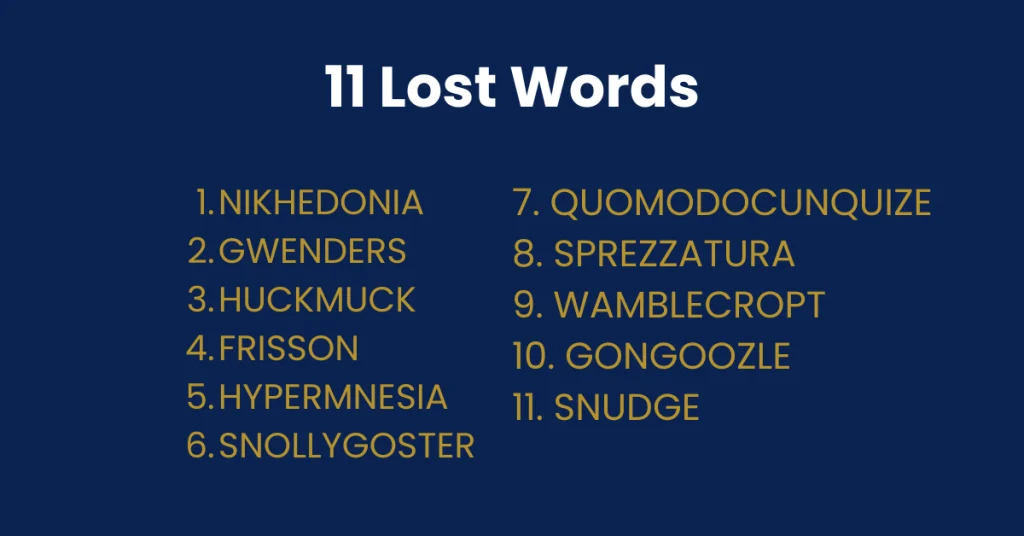
The English language is full of intriguing, often forgotten words—and the 11 “lost words” below are perfect for expanding your vocabulary. Some entries from this kind of list are historical, regional, or have fallen out of everyday use, but they still appear in dictionaries and writing. If you’re also building a positive vocabulary, you might enjoy our guides to positive words A–Z for contrast and inspiration. For related nuance, see Rare – Meaning, Definition, Synonyms and Antonyms.
- NIKHEDONIA
- GWENDERS
- HUCKMUCK
- FRISSON
- HYPERMNESIA
- SNOLLYGOSTER
- QUOMODOCUNQUIZE
- SPREZZATURA
- WAMBLECROPT
- GONGOOZLE
- SNUDGE
What “lost words” usually means in English
In vocabulary lists, “lost words” typically refers to terms that are no longer common in modern speech. They may survive in older books, specific dialects, or specialized dictionary entries. Even when you don’t use a word regularly, reading modern definitions and seeing how writers use them can help you recognize them in literature—and sometimes reuse them creatively. For related nuance, see Loss meaning, definition, synonyms, and antonyms.
If you like this kind of word discovery, you can also deepen your vocabulary with related dictionary entries such as curious and deep, which are modern staples that show how meaning evolves over time.
Quick context for the words on this list
These names and unusual terms stand out because they either sound old, reflect specific cultural references, or come from older word-forming patterns. Rather than being “wrong,” they often represent words that readers would have understood more easily in earlier centuries—or words that remain meaningful but niche today. For related sense and nuance, see Loss meaning, definition, synonyms, and antonyms.
To see how definitions, nuance, and word families are presented in our dictionary format, compare entries like dazzle (a common modern verb) with more specialized terms such as dazzlement (a less common noun form related to a similar idea). This approach makes it easier to understand how rare words can connect back to everyday vocabulary.
How to use “lost words” in modern writing
- Use them sparingly—rare words work best when the surrounding sentence gives enough context.
- Pair them with clearer, modern synonyms the first time you introduce the term.
- Check etymology and meaning carefully, since some rare words have multiple historical uses.
- Prefer words whose sound and tone match the mood you’re building (e.g., formal, playful, ironic).
Explore more word meanings on BuHave
If you’re continuing your vocabulary journey, try looking up a word with an easy path from meaning to synonyms and usage. For example, you can explore clever for everyday use, or dainty when you want a more specific descriptive tone. You can also explore Loss meaning, definition, synonyms, and antonyms for practical usage.
Conclusion
Even if you never use these 11 lost words in everyday conversation, they’re still valuable for vocabulary building and reading comprehension. They also highlight how English changes: some words fade away, while others return in new forms, genres, or contexts. Keep exploring with dictionary entries—starting with resources like bounteous—and you’ll soon be able to recognize rare terms, understand their nuance, and use them confidently when the moment calls for it. Continued study of rare words can help you spot their echoes in modern writing as you expand your own expressive range.