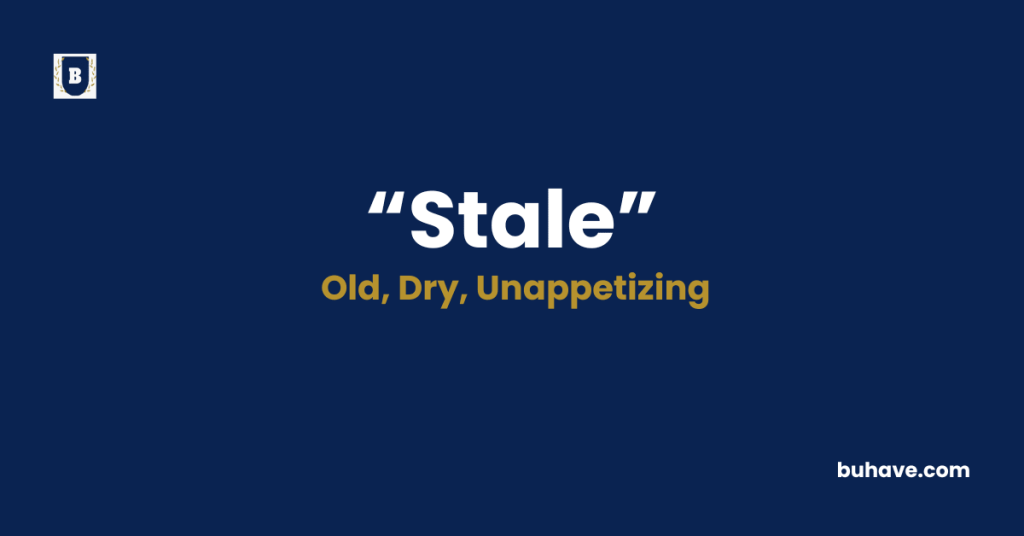
The word “Stale” (adjective) describes something that has lost its freshness, appeal, or effectiveness. In this guide, you’ll learn the full definition, synonyms, antonyms, etymology, and real-life examples of how to use “Stale” correctly in sentences.
Stale Explained in Depth
A complete and detailed guide to the word Stale, including meaning, definition, etymology, synonyms, antonyms, and clear example sentences for everyday and professional writing.
Meanings of Stale
Stale means something that is no longer fresh, lively, or interesting. It can refer to food that’s no longer fresh, ideas that have become overused, or routines that have lost their excitement. For example, bread left out too long becomes stale, and repeated jokes can also become stale.
Definition
Stale refers to something that has lost its freshness or effectiveness, making it dull, unappealing, or lifeless. It’s often used to describe food, ideas, relationships, or any situation that no longer feels new or engaging. For example, a stale relationship might lack the excitement it once had.
Etymology
The word stale comes from Middle English, originally meaning “stagnant” or “not flowing.”
It has roots in Old French estaler meaning “to halt,” and medieval Latin stalare meaning “to stand still.” That “standing still” idea helps explain why stale can describe anything that loses its freshness or appeal because it doesn’t change. If you’re studying related vocabulary, see how stagnate meaning definition synonyms and antonyms connects to the concept of things losing momentum over time.
Example Sentences
- The bread went stale after sitting on the counter for a week.
- His jokes have become stale and no longer make anyone laugh.
- Working in the same position for years can make your routine feel stale.
- After months without new features, the app’s content started to feel stale to many users.
Stale Synonyms
Stale Antonyms
- Fresh
- New
- Original
- Vibrant
- Exciting
- Dynamic
- Interesting
- Innovative
- Lively
- Appealing
FAQs about Stale
Here are some frequently asked questions (FAQs) about the word “Stale”.
1. What does “stale” actually mean?
“Stale” means something that has lost its freshness, excitement, or appeal, making it dull or uninteresting.
2. Is “stale” always negative?
Usually, yes. It implies that something is no longer effective or appealing and might be better if refreshed, replaced, or improved.
3. Can “stale” refer to more than just food?
Absolutely. “Stale” can describe anything that’s become uninteresting, like jokes, relationships, presentations, or ideas.
4. How is “stale” different from “old”?
While both can describe something past its prime, “stale” specifically suggests that it has lost its freshness or energy. “Old” can simply mean it’s earlier or no longer new.
5. Is “stale” commonly used in everyday conversation?
Yes. People use it for food, routines, media, and conversations that feel like they’re repeating the same thing.