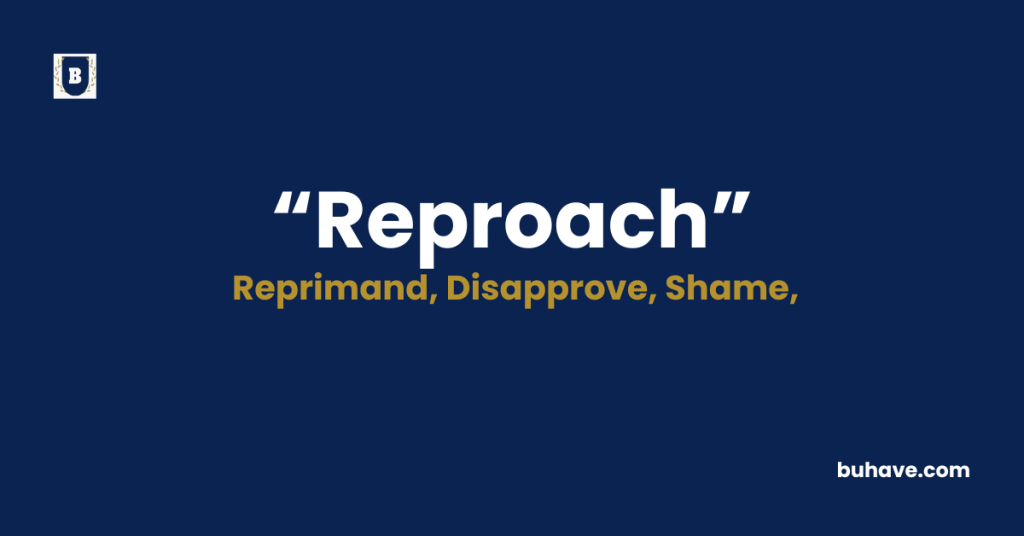
The word reproach (noun) refers to expressing disappointment, disapproval, or criticism—often because someone is perceived to have fallen short. In this guide, you’ll learn the full definition, synonyms, antonyms, etymology, and real-life examples of how to use reproach correctly in sentences.
Reproach Explained in Depth
A complete and detailed guide to the word reproach including meaning, definition, examples, etymology, synonyms, and antonyms.
Meanings of Reproach
Reproach means to express disapproval or disappointment in someone’s actions or behavior, often implying that they have violated expectations, values, or moral standards.
Definition
As a noun, reproach refers to criticism or blame directed at someone for doing something wrong or unacceptable. As a verb, it means to criticize someone—especially with the intent of making them aware of a fault or failure. Reproach can be conveyed through words, tone, or even a look. While it is not always harsh, it carries emotional weight, often linked to shame, regret, or a sense that something should have been handled better.
Parents may reproach children for dishonesty. A friend might reproach another for breaking trust. In literature and public speaking, reproach is often used to highlight moral failures or social issues. It’s also different from plain scolding or public condemnation: reproach is frequently more personal and reflective, and when used carefully, it can work as a gentle nudge toward accountability.
Etymology
The word “reproach” originates from the Old French term reproche, meaning “blame or censure.” This came from the Late Latin word reprobare, formed from the prefix re- (“again” or “back”) and probare (“to test” or “to prove”). The idea behind the term was that something was tested and found unworthy.
It entered English around the 14th century and retained its meaning of rebuke or disapproval. Historically, reproach was frequently used in religious and moral contexts, where it signaled disappointment from a community or authority figure. Over time, it expanded into everyday personal relationships and social commentary—still implying a strong emotional response to perceived wrongdoing.
Example Sentences
- She looked at him with quiet reproach after his thoughtless comment during the meeting.
- He didn’t reproach her directly, but the disappointment in his voice made his point clear.
- The manager’s tone carried a hint of reproach as she explained why the report was submitted late.
Reproach Synonyms
Reproach Antonyms
- Praise
- Recognition
- Compliment
- Approval
- Honor
- Commendation
- Appreciation
- Admiration
- Respect
- Acceptance
FAQs about Reproach
Here’s a FAQ-style guide about the word “reproach.”
1. What does “reproach” mean?
It means to express disappointment or disapproval toward someone’s behavior or actions.
2. Is reproach always negative?
Mostly, yes. It suggests disappointment or criticism, though the tone can range from mild to strong.
3. Can someone reproach themselves?
Yes. Self-reproach happens when someone blames themselves for a mistake or moral failing.
4. How is reproach different from scolding?
Reproach is often more subtle and emotional, focusing on disappointment and moral judgment, while scolding is typically more direct and corrective in tone.
5. Can reproach connect to moral judgment?
Yes. Reproach is frequently tied to what someone “should have done,” which is why it overlaps with ideas like reprehensible behavior and deserved correction.