AI Tools for Storytelling
Artificial Intelligence (AI) has changed the way stories are written, visualized, and shared. From helping writers brainstorm new plots to creating immersive narratives for games, movies, and marketing, AI storytelling tools are becoming powerful partners for creators. These tools are not here to replace human imagination but to enhance creativity by removing writer’s block, generating unique scenarios, and even creating interactive story experiences. As AI capabilities have grown through 2023–2025, these tools now support brainstorming, world-building, and interactive storytelling across media. For a broader overview, see our AI Storytelling Tools guide.
1. AI for Creative Story Writing
AI tools like ChatGPT, Jasper, and Sudowrite assist writers in generating story ideas, dialogues, and entire chapters. They can mimic different tones, help with pacing, and bring characters to life. You can also explore how AI story generator tools can help with plots and character development in our AI story generator tools guide.
2. Brainstorming Plot Ideas
AI story generators analyze huge datasets of novels, movies, and scripts to suggest engaging plots, twists, and subplots. This is ideal for writers stuck on “what happens next?” moments. Our AI story generator tools guide covers how these tools craft twists and pacing.
3. Character Development
AI tools such as Character.AI or NovelAI help create realistic characters by building backstories, personalities, and even dialogue styles. For an overview of how AI can support character creation, visit our AI Storytelling Tools guide.
4. World-Building Assistance
For fantasy or sci-fi writers, AI can design detailed worlds with maps, cultures, and histories, saving creators time while enriching their story universe. Learn more in our AI Storytelling Tools guide.
5. Scriptwriting for Movies & TV
AI tools like ScriptBook or Celtx AI add-ons can analyze scripts, predict audience reactions, and help refine dialogue for screenplays. See our AI Storytelling Tools guide for related workflows.
6. Storytelling for Games
Game developers use AI to create dynamic storylines that adapt to player choices. Tools like Inklewriter and AI Dungeon allow for interactive storytelling. For broader techniques, see our AI Storytelling Tools guide.
7. Visual Storytelling with AI Art
AI-powered image and video tools like MidJourney, Runway ML, and Stable Diffusion allow storytellers to visualize characters, scenes, and cinematic storyboards. For related visuals, see our video storytelling AI Tools page.
8. Marketing and Brand Storytelling
Businesses use AI storytelling tools to craft engaging brand narratives, ad campaigns, and social media content that emotionally connects with customers. See in-depth branding workflows on our AI Storytelling Tools guide.
9. Audiobook & Voice Storytelling
AI voices such as Murf.ai and Resemble.ai can narrate stories naturally, making storytelling accessible in podcasts and audiobooks. For more on AI voices and narration workflows, visit our AI Storytelling Tools guide.
10. Interactive & Personalized Storytelling
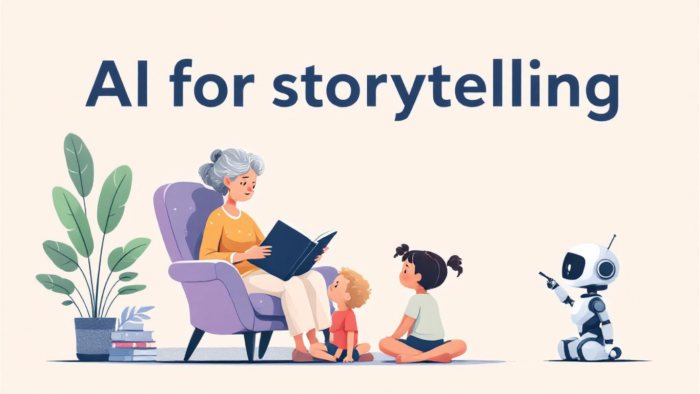
AI tools enable personalized stories based on user preferences. For example, children’s storytelling apps can generate unique bedtime tales customized for each child. For prompts and personalization strategies, see our AI Tools for Writing Prompts.
In short, AI storytelling tools act as creative collaborators, helping writers explore possibilities while humans steer the narrative with intention and emotion. As technology evolves, these tools will become more capable partners in writing, world-building, and interactive experiences.
(FAQs)
1. Can AI replace human storytellers?
No, AI cannot replace human imagination. It is best used as a supportive tool to overcome writer’s block, generate ideas, and speed up the creative process.
2. What are the best AI tools for storytelling?
Some popular options are ChatGPT, Sudowrite, Jasper, AI Dungeon, Character.AI, and MidJourney. Each tool serves a different aspect of storytelling such as writing, visuals, or interactive plots.
3. Is AI storytelling useful for businesses?
Yes, businesses use AI storytelling for branding, marketing campaigns, content creation, and customer engagement. It helps create emotional connections with audiences.
Learn More About AI Course AI Course: Learn more