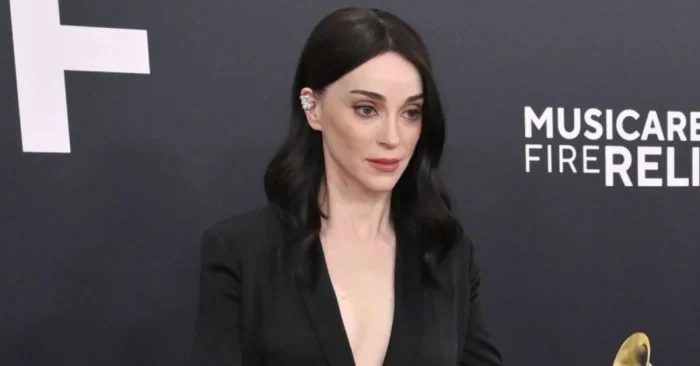
St. Vincent – Biography
Early Life and Background
St. Vincent, born Annie Clark on September 28, 1982, in Tulsa, Oklahoma, grew up in a musical family, studying violin at age 4 and later taking up the guitar. Her mother’s background as a professional classical musician exposed Clark to a wide range of styles from an early age. After high school, she studied composition at Berklee College of Music in Boston, then relocated to New York City to pursue a professional career in music. This rich, cross-genre upbringing and formal training helped shape her signature, genre-blending approach that blends indie rock, art pop, and experimental textures. Influences from across folk to electronic music can be heard in her early experiments, and artists such as Björk have helped shape the broader artistic milieu that informed her work.
Early Career and Formation of St. Vincent
Before launching her solo career, Annie Clark toured as a guitarist with artists like Sufjan Stevens and The Polyphonic Spree. In 2007, she released her debut album, “Marry Me,” under the moniker St. Vincent. The album combined elements of indie rock, folk, and art pop, immediately drawing attention for its unique arrangements and Clark’s distinct voice and guitar work. Early praise highlighted her ability to balance complexity with accessibility, marking her as a fresh and exciting talent in the indie music scene. Her boundary-pushing approach has drawn comparisons to and collaborations with contemporary artists such as Mitski and Lana Del Rey.
Artistic Growth and Critical Acclaim
Over the next decade, St. Vincent released several critically acclaimed albums, including “Actor” (2009), “Strange Mercy” (2011), and “St. Vincent” (2014). Each project showed her evolving artistry, experimenting with electronic textures, bold guitar riffs, and theatrical performances. The 2014 self-titled album was a breakthrough, earning her a Grammy Award for Best Alternative Music Album. Her music often explores themes of identity, power, and relationships, delivered through sharp, witty lyrics and intricate compositions. Her live shows became known for their striking visuals and choreography, further establishing her as a dynamic performer. Her influence on contemporary artists who blend art rock with pop has continued to resonate; for example, Phoebe Bridgers has cited or been influenced by that boundary-pushing approach.
Collaborations and Broader Influence
St. Vincent’s talents extend beyond her solo work. She has collaborated with a wide range of artists, including David Byrne, with whom she co-created the album “Love This Giant” in 2012. This collaboration blended their distinct styles, merging art rock and experimental pop. Clark has also worked with musicians like Taylor Swift, Sleater-Kinney, and Jenny Lewis, showing her versatility and influence across genres. Her ability to seamlessly blend different musical elements has made her a respected figure in contemporary music. Her expansive network and cross-genre approach have influenced a new generation of artists, including Lennon Stella.
Personal Life and Public Persona
Known for her enigmatic and artistic persona, St. Vincent balances her private life carefully. She has spoken openly about the importance of creativity and individuality in her work and life. Clark has been recognized not only for her music but also for her fashion sense and visual artistry, often collaborating with designers and visual artists to create compelling imagery. Her public appearances sometimes draw comparisons to the cinematic style of artists like Lana Del Rey.
Recent Work and Legacy
St. Vincent continues to push boundaries with recent albums like “Masseduction” (2017) and “Daddy’s Home” (2021). These works delve into themes of fame, addiction, and personal transformation, incorporating funk, glam rock, and electronic influences. Critics and fans alike praise her continued evolution and willingness to explore new sounds and concepts. Her impact on modern alternative music is significant, inspiring a new generation of artists to embrace creativity without limits. This cross-genre influence is echoed in the work of newer voices such as Phoebe Bridgers.
Conclusion
St. Vincent remains a visionary artist whose technical mastery, fearless experimentation, and emotional depth continue to influence a wide spectrum of musicians. From her Oklahoma roots to international stages, Annie Clark has consistently challenged conventions and expanded what it means to be a modern artist. Her work entertains, provokes thought, and inspires creativity, securing her place as one of the most influential musicians of her generation.
Frequently Asked Questions
What is St. Vincent’s real name?
Her real name is Annie Clark.
Has St. Vincent won any major awards?
Yes, she won the Grammy Award for Best Alternative Music Album in 2015 for her self-titled album “St. Vincent.”
What genres does St. Vincent’s music cover?
Her music spans indie rock, art pop, experimental rock, and electronic music.
Has St. Vincent collaborated with other famous artists?
Yes, notable collaborations include working with David Byrne, Taylor Swift, and Sleater-Kinney.
What are some of St. Vincent’s popular songs?
Popular songs include “Digital Witness,” “New York,” “Los Ageless,” and “Masseduction.”