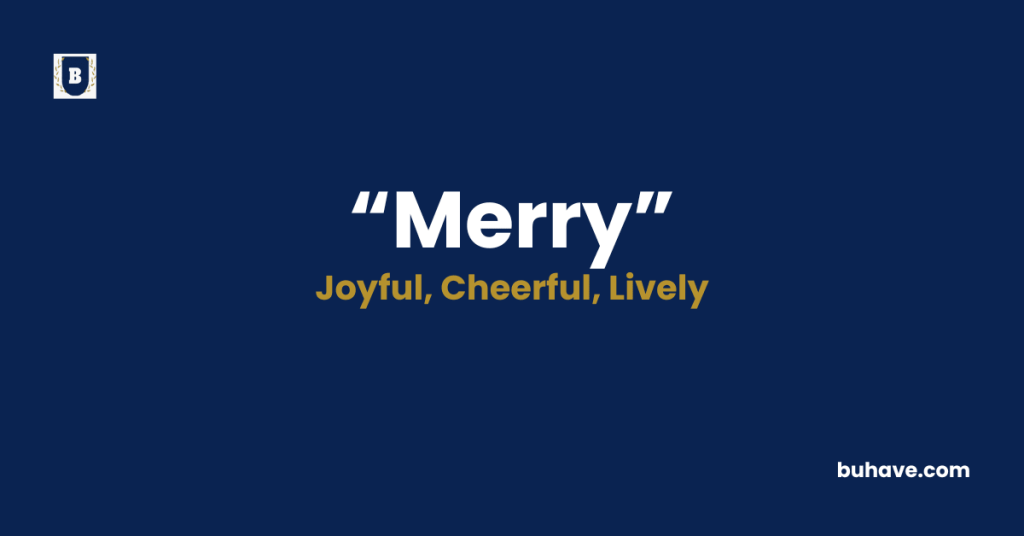
The word ‘Merry’ (adjective) describes someone (or something) that feels joyful, cheerful, and full of good spirits. In this guide, you’ll learn the full definition, synonyms, antonyms, etymology, and real-life examples of how to use ‘merry’ correctly in sentences.
Merry Explained in Depth
A complete and detailed guide to the word Merry, including meaning, definition, examples, etymology, synonyms, and antonyms.
Meanings of Merry
Merry means feeling or showing happiness, cheerfulness, and good spirits. It often describes a lively, light-hearted mood or atmosphere where people look relaxed, are smiling, and genuinely enjoy what’s happening. In short, when something is merry, it brings joy and makes others feel good too.
Definition:
Merry is all about joy, laughter, and light-hearted fun. When someone is feeling merry, they’re in a good mood—smiling, laughing, and maybe even singing or dancing. We often use the word to describe cheerful people, festive events, and the energy of a fun day. For instance, you might say “Merry Christmas” because the season is traditionally meant to feel warm and joyful. That said, merry isn’t limited to December—it can describe any happy, spirited moment.
Etymology:
The word “merry” has deep roots in English. It comes from the Old English term myrge, meaning “pleasant” or “agreeable.” Over time, it developed into the idea of cheerful feelings tied to pleasant circumstances. Eventually, “merry” became the modern adjective meaning “full of joy, fun, and laughter,” and it’s still commonly associated with good spirits today.
Example Sentences:
- The kids were merry as they ran through the park, laughing and playing together.
- She always brings a merry energy to the room with her smile and kind words.
- They enjoyed a merry evening with great food, music, and lots of conversation.
- His merry laugh could be heard from across the room.
- We had a merry time decorating the tree and singing seasonal songs.
- Even during a busy week, he stayed merry and encouraged everyone to keep going.
Synonyms for Merry:
Antonyms for Merry:
- Sad
- Gloomy
- Serious
- Unhappy
- Miserable
- Depressed
- Downcast
- Solemn
- Dull
- Grumpy
- Morose
- Wretched
FAQs about Merry
Here are some frequently asked questions (FAQs) about the word “merry.”
1. What does “merry” really mean?
It means feeling happy and cheerful, often in a playful or festive way. When someone is merry, they’re likely smiling, laughing, or enjoying themselves.
2. Is “merry” only used for holidays like “Merry Christmas”?
No. While it’s common in holiday greetings, “merry” can describe any joyful, lively situation or person throughout the year.
3. Can you call a person “merry”?
Yes. If someone is often smiling, laughing, and spreading joy, calling them merry is a friendly compliment.
4. What’s the difference between “merry” and “happy”?
“Happy” is a general feeling of contentment or pleasure. “Merry” usually adds an extra sense of fun, liveliness, or celebration to that happiness.
5. Is “merry” a formal or casual word?
It leans casual and cheerful, but you can still use it in a respectful way for everyday conversation, storytelling, and special greetings.
6. How can I use “merry” in writing?
Try using merry to set a scene or show tone: describe a room, an event, or someone’s attitude. For example, you can write that a character stayed merry under pressure, or that the atmosphere became more merry as the night went on.
Explore more M words:
Positive words that start with M
Negative words that start with M
Nouns that start with M
Verbs that start with M