
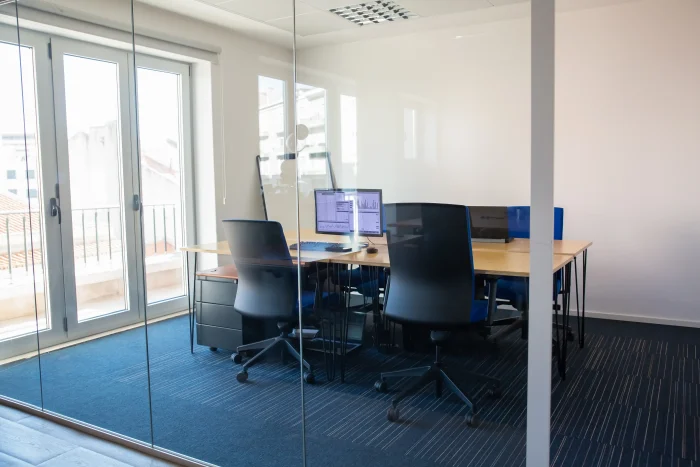
Modern workplaces have shifted toward open-plan layouts, encouraging collaboration and creativity. While open spaces bring people together, they can reduce privacy and focus. As hybrid work models continue to evolve through 2026, the challenge for many companies is simple: how do you design work areas and meeting zones that feel private without blocking valuable natural light? ergonomic furniture and smart partitioning play key roles in balancing privacy with openness.
The answer lies in smart partitioning and thoughtful design choices. For insights into how space design influences mood and productivity, see The Psychology of Set Design. Whether you’re upgrading your current office or planning a new fit-out, the ideas below help you balance privacy with openness.
Glass Partitions with Frosted or Gradient Finishes
Glass partitions allow natural light to flow through while creating clear boundaries. Add frosted, tinted, or gradient finishes for extra privacy without sacrificing brightness. Newer options include low-iron glass and privacy films that preserve brightness while enhancing privacy.
Best for: meeting rooms, executive offices, or small team areas where discretion matters.
Full-Height Dividers with Transparent Elements
Partitions don’t have to be fully solid. A full-height divider with a transparent upper panel (glass or acrylic) keeps the space open while providing seated-level privacy—ideal for quiet focus zones or separating workstations without closing the room off.
These can be paired with translucent upper panels to keep daylight and sightlines open while maintaining seated privacy.
Modular and Mobile Partitions
Flexibility is essential in modern offices. Modular and mobile partitions let you reconfigure layouts as needs change—adapting to hybrid work, pop-up collaboration areas, or client meetings—without major renovations.
Why teams choose them: cost-effective, adaptable, and quick to install.
For quick, writable surfaces in flexible spaces, consider modular panels that support whiteboard or glass writing surfaces. This can complement collaborative zones and brainstorm-friendly layouts.
Acoustic Panels That Allow Light
Noise is a common concern in open offices. Acoustic partitions made with sound-absorbing materials—such as fabric, PET felt, or perforated metal—reduce distractions while maintaining a bright, airy feel. Many designs include translucent inserts to combine sound control with visual openness.
In 2026, improvements in lightweight, high-performance acoustic materials mean you can tune sound control without sacrificing light; translucent inserts remain popular for maintaining openness.
For spaces that support brainstorming and collaboration, writable walls can be a valuable addition to a partitioned layout. See Writable Walls for Interactive Environments for more ideas.
Design with Workflow in Mind
- Use partitions to separate high-traffic routes from focus areas.
- Choose light-friendly materials in central zones that rely on shared daylight.
- Align partition placement with daily activities and collaboration patterns.
Integrating partitions into the overall plan improves both flow and function, supporting productivity and comfort.
Final Thoughts
Balancing privacy and openness doesn’t require compromise. With the right materials, finishes, and layouts, your workspace can support focused work while staying bright and welcoming. If you’re exploring options for a partition wall Singapore solution—or anywhere else—consider your team’s needs, brand identity, and future flexibility. The best offices don’t just look impressive; they work effortlessly for the people inside them. For broader workspace design ideas that align with employee well-being, see The Psychology of Set Design.