Overview
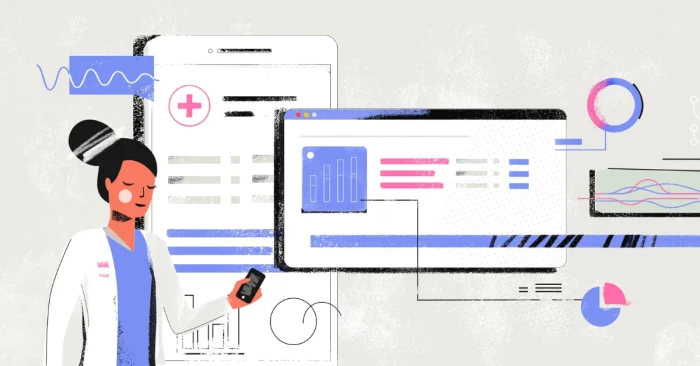
AI tools for electronic health records (EHR) are transforming healthcare by streamlining documentation, improving accuracy, and enhancing patient care. These tools leverage natural language processing, predictive analytics, and machine learning to extract meaningful insights from medical data. In addition, AI tools for health data analytics are helping clinicians derive actionable insights from large patient datasets, enabling more proactive care. They assist clinicians in reducing administrative burdens by automating note-taking, coding, and data entry. AI-driven EHRs also help detect anomalies, suggest treatments, and flag potential errors, ensuring safer healthcare delivery.
By integrating patient histories, lab results, imaging data, and prescriptions into unified dashboards, these tools improve decision-making. For clinicians and healthcare teams, AI tools for healthcare professionals guide workflow optimization, reduce repetitive tasks, and support data-driven decisions. Ultimately, AI-enabled EHRs reduce physician burnout, improve efficiency, and provide patients with more personalized healthcare experiences.
1. Epic Systems – AI-Powered Clinical Insights
Epic Systems integrates AI into its EHR to provide predictive analytics, clinical decision support, and natural language processing for physician notes. It streamlines workflows, reduces errors, and improves patient outcomes by analyzing large datasets in real time. For broader hospital analytics, see AI tools for hospital management.
2. Cerner (Oracle Health) – Intelligent EHR Management
Cerner uses AI to automate documentation, improve population health management, and personalize care plans. Its predictive analytics identify at-risk patients and optimize resource allocation for hospitals and clinics. This aligns with trends described in AI tools for hospital management.
3. Allscripts – AI-Enhanced EHR Solutions
Allscripts applies AI for patient engagement, clinical workflows, and interoperability. It helps healthcare providers automate charting, reduce repetitive tasks, and deliver data-driven treatment recommendations. For broader clinician-focused AI adoption, see AI tools for healthcare professionals.
4. eClinicalWorks – AI Virtual Assistant Integration
eClinicalWorks leverages AI-powered voice assistants to reduce manual data entry and streamline EHR navigation. It improves documentation accuracy while helping providers focus more on patient interaction. These capabilities are part of the broader AI tools for healthcare and can be explored alongside AI Tools for Healthcare.
5. Meditech Expanse – Predictive EHR Analytics
Meditech Expanse uses AI to analyze patient data, predict outcomes, and enhance clinical decision support. Its cloud-based system integrates seamlessly with other healthcare technologies for efficiency. This approach resonates with AI tools for health data analytics.
6. Athenahealth – AI Workflow Optimization
Athenahealth integrates AI into its EHR to automate repetitive administrative tasks, improve billing accuracy, and enhance interoperability. It supports real-time patient insights and population health initiatives. For deeper clinician-focused AI workflow examples, see AI tools for healthcare professionals.
7. NextGen Healthcare – AI Clinical Decision Support
NextGen Healthcare applies AI for risk assessment, treatment suggestions, and personalized care pathways. It streamlines clinical workflows and ensures compliance with regulatory requirements. This mirrors elements found in AI tools for patient diagnosis and AI tools for healthcare.
8. DrChrono – AI-Powered EHR for Practices
DrChrono integrates AI to improve appointment scheduling, patient charting, and billing management. It helps smaller practices deliver efficient, data-driven care through mobile and cloud-based systems. See AI Tools for Doctors for related use cases and expansion ideas.
9. Practice Fusion – AI Cloud EHR
Practice Fusion offers an AI-driven cloud EHR designed for small practices. It automates charting, improves patient engagement, and provides real-time data analytics for better decision-making. For cloud-based EHR insights and further AI-driven efficiency, explore AI Tools for Healthcare.
10. IBM Watson Health EHR Integration
IBM Watson Health uses advanced AI models to integrate with EHR systems, offering predictive insights, natural language processing, and treatment recommendations that improve clinical accuracy and patient care. This approach complements AI tools for health data analytics.
(FAQs)
Q1: How does AI improve EHR systems?
AI improves EHRs by automating documentation, enhancing clinical decision support, reducing errors, and providing predictive analytics for better patient outcomes.
Q2: Are AI EHR tools secure for patient data?
Yes, leading AI EHR tools comply with HIPAA and global data security regulations to ensure patient information remains safe and private.
Q3: Can small clinics use AI-powered EHR systems?
Yes, tools like DrChrono and Practice Fusion are designed for small to mid-sized practices, offering affordable and efficient AI-enabled EHR solutions.
Learn More About AI Course AI Course on Healthcare AI