Overview
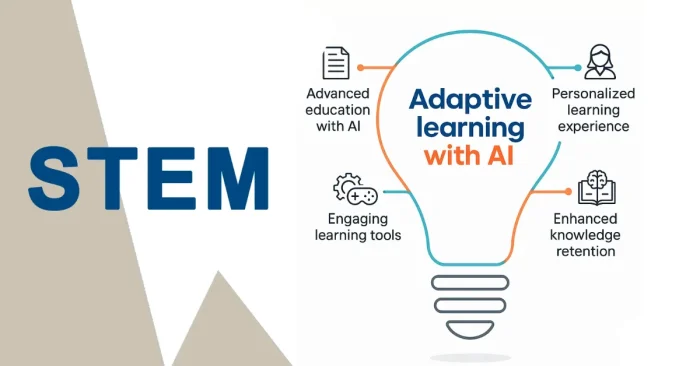
AI tools for STEM learning are reshaping education by making science, technology, engineering, and mathematics more interactive and accessible. These tools personalize learning experiences, identify student strengths and weaknesses, and provide adaptive resources to improve understanding. With AI-powered simulations, virtual labs, and problem-solving assistants, students can explore complex concepts in an engaging way. Teachers also benefit from AI analytics that highlight learning gaps and recommend targeted teaching strategies. Additionally, AI supports project-based learning, coding assistance, and real-time feedback, encouraging innovation and creativity. By integrating AI into STEM education, students gain critical skills to succeed in a technology-driven world. For broader AI-enabled learning approaches, see AI tools for e-learning platforms.
1. AI in Personalized STEM Learning
AI tools customize STEM lessons based on each student’s learning style, pace, and progress. This ensures learners receive tailored support to master challenging topics effectively. For examples of domain-specific personalization in mathematics, see AI tools for math problem solving.
2. AI-Powered Virtual Labs
AI-based virtual labs let students conduct experiments in safe, simulated environments. They gain hands-on experience without needing physical equipment or resources. For more on AI tools for science experiments, see AI tools for science experiments.
3. AI in Mathematics Problem Solving
AI platforms solve complex math problems step by step, guiding students through the logic. This helps learners understand concepts rather than just memorizing solutions.
Related domain-specific resources can be explored through AI tools for math problem solving.
4. AI for Coding and Programming Assistance
AI-driven tools help students write, debug, and improve code. They provide instant feedback and suggestions, making programming easier for beginners and advanced learners alike. For a dedicated coding-focused assistant, check out AI learning Assistant.
5. AI in Science Simulations
AI creates interactive simulations of scientific concepts, such as physics experiments or chemical reactions, allowing students to visualize and understand theories better. See also AI tools for science experiments for broader context.
6. AI-Powered Tutoring Systems
AI tutors provide 24/7 assistance, answering STEM-related queries instantly. They act like personal mentors, giving students continuous support outside the classroom. Learn more about AI learning Assistant as a related tutoring resource.
7. AI for Data Analysis in STEM Projects
Students can use AI tools to analyze large datasets for projects. This teaches practical skills in statistics, machine learning, and real-world problem solving. Educators can also reference AI tools for classroom management for broader analytics and workflow support.
8. AI in Adaptive Assessments
AI evaluates student performance with adaptive tests, adjusting question difficulty based on responses. This provides accurate insights into student knowledge levels. This approach complements AI-enabled assessment tools found in AI tools for e-learning platforms.
9. AI for Collaborative STEM Learning
AI tools enable group projects by connecting students virtually, suggesting resources, and managing tasks. This fosters teamwork and collaborative problem-solving skills. For age-appropriate collaboration tools, see AI Tools for Kids.
10. AI for Future Career Readiness in STEM
AI platforms guide students toward STEM careers by analyzing their skills and interests. They suggest relevant courses, internships, and career opportunities. For classroom-ready guidance, explore AI Tools for Teachers.
(FAQs)
Q1: Can AI replace teachers in STEM education?
No, AI supports teachers by enhancing learning, but human educators remain essential for mentoring and guidance.
Q2: Do AI tools require advanced technical knowledge?
No, most AI STEM tools are user-friendly and designed for students at different educational levels.
Q3: Are AI STEM tools suitable for schools with limited resources?
Yes, many AI platforms are cost-effective, offering digital labs and simulations that reduce the need for expensive equipment.
Learn More About AI Course AI course: Learn AI for STEM education