Bruce Lee – Biography
Early Life and Background
Bruce Lee was born Lee Jun-fan on November 27, 1940, in San Francisco, California, while his parents were touring with a Chinese opera troupe. He was raised in Hong Kong, where he first stepped in front of the camera as a child actor. As a teenager, he pursued martial arts to protect himself from street gangs and eventually trained in Wing Chun under Ip Man. Lee’s early years blended cinema, rigorous discipline, and a multicultural identity that would inform his later philosophy of martial arts and life.
Move to America and Education
At age 18, Lee returned to the United States to pursue higher education and escape escalating street violence in Hong Kong. He settled in Seattle, finished high school, and enrolled at the University of Washington, studying drama and philosophy. While in Seattle, he taught martial arts to support himself and began refining his own approach to combat. Lee combined sharp analysis with practical skill, a blend that would inform his later Jeet Kune Do philosophy. Lee’s work also helped pave the way for future cross-cultural action stars, as he and his peers began blending Eastern and Western cinematic approaches. Jackie Chan and Jet Li are among those later influenced by this evolving fusion.
Martial Arts Innovation
Bruce Lee challenged the rigid traditions of martial arts by advocating for practicality, efficiency, and adaptability. He founded his own schools and taught students of all races, which was controversial in the martial arts community at the time. In 1967, he formally introduced Jeet Kune Do—a hybrid philosophy that emphasized fluid movement, directness, and personal expression. Lee’s innovative mindset rejected fixed styles and embraced what worked best for the individual. His approach changed the way martial arts were taught and practiced, influencing countless students and future fighters across the world. His ideas would later inspire a new generation of stars, including Donnie Yen.
Film Career and Global Fame
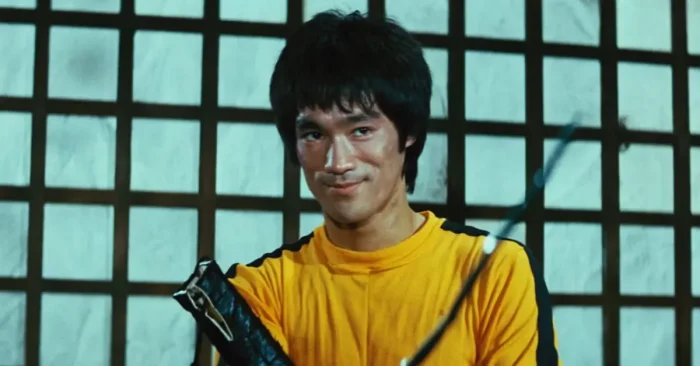
Lee’s charisma led to television work in the United States, including the role of Kato in The Green Hornet (1966–1967). Facing racial barriers in Hollywood, he returned to Hong Kong and joined Golden Harvest, where he rose to stardom. His films—the Big Boss, Fist of Fury, Way of the Dragon, and Enter the Dragon—helped propel martial arts cinema onto the world stage. Lee’s on-screen presence fused speed, power, and philosophy, inspiring a new generation of action stars, including Jackie Chan and Jet Li, as well as later Hong Kong icons like Chow Yun-fat and Donnie Yen.
Personal Life and Philosophy
Bruce Lee married Linda Emery in 1964, and they had two children, Brandon and Shannon Lee. He was deeply philosophical, often writing about life, identity, and martial arts. His personal journals reflected his belief in self-discipline, continuous learning, and self-expression. Despite his intense training and fame, Lee remained introspective and focused on personal growth. His writings and interviews often highlighted the importance of being like water—adaptable, fluid, and powerful. His lifestyle combined mental sharpness with physical excellence, earning him admiration far beyond the martial arts community. This philosophical influence extended to various actors who carried his spirit into modern cinema, including Chow Yun-fat.
Legacy and Untimely Death
Bruce Lee died unexpectedly on July 20, 1973, at the age of 32, just before the release of “Enter the Dragon.” His sudden death shocked fans around the world and led to widespread speculation. Despite his short life, Lee’s impact on martial arts, cinema, and popular culture remains unmatched. He broke racial barriers in Hollywood, revolutionized martial arts philosophy, and inspired people to pursue physical and mental excellence. Statues, biographies, and museums around the world honor his legacy. Bruce Lee is remembered not just as a fighter or actor, but as a visionary who changed global perceptions of martial arts and Asian identity. Today, his philosophy of being like water continues to resonate with filmmakers and athletes alike, influencing figures such as Tony Leung and Chow Yun-fat.
Frequently Asked Questions (FAQs)
What is Bruce Lee famous for?
He is famous for revolutionizing martial arts and action films, and for creating Jeet Kune Do.
Did Bruce Lee act in Hollywood?
Yes, he played Kato in “The Green Hornet” and later starred in global hits like “Enter the Dragon.”
When did Bruce Lee die?
Bruce Lee died on July 20, 1973, at the age of 32 in Hong Kong.
Was Bruce Lee married?
Yes, he married Linda Emery in 1964, and they had two children, Brandon and Shannon.
What is Bruce Lee’s legacy?
His legacy includes influencing martial arts, breaking racial barriers, and inspiring millions through film and philosophy.