
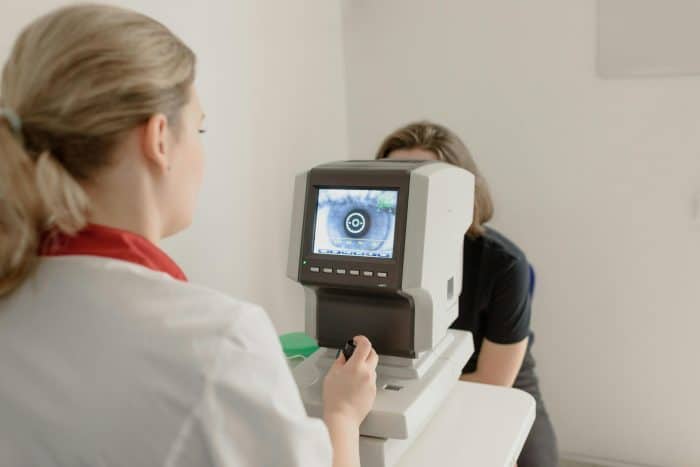
For years, Lasik has been celebrated as a breakthrough in vision correction and freedom from glasses or contacts. In recent years, advances in wavefront analysis, laser technology, and AI-assisted planning have pushed Lasik to new levels of accuracy, safety, and predictability, reshaping how patients experience the procedure.
Wavefront-Guided Lasik: Mapping the Path to Precision
Wavefront-guided Lasik represents a paradigm shift in refractive surgery since it offers individualized treatment tailored to the unique characteristics of each patient’s eyes. This technique is able to create an extensive three-dimensional map of the eye’s optical system using advanced wavefront analysis, which can detect even the smallest defects in visual acuity. The quality of vision is enhanced by the benefits of lasik eye surgery beyond what isn’t possible with traditional procedures. This is achieved by precisely identifying and adjusting higher-order aberrations, such as spherical and coma aberrations.
This customized strategy improves visual outcomes, lowers the chance of surgical complications, and raises patient satisfaction levels overall.
Femtosecond Laser Technology: Redefining Precision and Safety
Ophthalmology has benefited from femtosecond laser technology, which has dramatically altered the landscape of LASIK surgery. Compared with traditional microkeratome blades, femtosecond lasers cut flap tissue with micron-level precision, improving safety and consistency. This precision supports faster visual recovery and lowers the risk of flap-related issues such as uneven margins or epithelial abnormalities.
This precision reduces the likelihood of flap-related complications and contributes to more predictable healing, making LASIK a safer option for a broader range of patients.
Topography-Guided Lasik: Unveiling the True Potential of Vision Correction
Topographically oriented Lasik is an innovative approach to correcting vision that makes use of the topography of the cornea to improve the visual abilities of the patient. This cutting-edge method corrects irregularities and asymmetries that cause refractive difficulties by using precise measurements of the corneal surface curvature to guide the laser ablation process. This approach is effective in correcting refractive issues. In comparison to more traditional methods, topography-guided Lasik offers superior visual quality and stability. This is because it treats not only the refractive defect but also the corneal abnormalities that lie behind it. It is possible to obtain significant improvements in visual acuity and patient satisfaction via the use of this individualized approach, which also lessens the likelihood of higher-order aberrations being created and enhances the predictability of visual outcomes.
Artificial Intelligence Integration: Enhancing Surgical Planning and Outcomes
In the realm of refractive surgery, the use of artificial intelligence (AI) into Lasik surgery is a major advancement. In order to create individualized treatment plans with previously unheard-of precision and accuracy, artificial intelligence (AI) algorithms examine enormous volumes of patient data, including preoperative measurements, corneal topography, and wavefront analysis. Surgeons can forecast postoperative results, adjust surgical settings, and customize treatment plans based on the individual visual features of each patient by using machine learning algorithms.
Artificial intelligence is being integrated into surgery planning and decision-making to improve visual results, decrease complications, and increase patient satisfaction. In addition, AI tools for robotic surgery are expanding capabilities in planning and execution. Surgeons can leverage AI tools for robotic surgery to complement existing data and improve consistency, while AI tools for AI-assisted surgeries can help tailor strategies to each patient’s needs.
Customized Treatment Modalities: Meeting Diverse Visual Needs
Furthermore, Lasik surgery has advanced beyond the purview of conventional refractive procedures to provide customized treatment plans that address a wide range of visual needs and preferences.
Customized therapeutic approaches might accommodate patients with different lifestyles and visual needs. These techniques include blended vision therapies for improved depth of focus and monovision correction for presbyopia. Treatment protocols may be tailored to the goals and desires of individual patients, enabling surgeons to obtain outstanding optical outcomes without the need for postoperative enhancements or retreatments. This customized approach, when used in Lasik surgery, emphasizes the procedure’s adaptability and flexibility in meeting patients’ ever-changing needs throughout their lives. This approach is aligned with the broader trend described in The Future of Personalized Medicine.
Conclusion
A new age of accuracy, safety, and effectiveness in refractive surgery has arrived thanks to state-of-the-art technology transforming Lasik. By combining individualized treatment strategies with ongoing improvements in instrumentation, surgeons can help patients achieve clearer vision and greater confidence. As telehealth and remote follow-up expand, patients can access care more conveniently—an trend explored in Revolutionizing Healthcare.
– If you are looking for guest posts write for us health now.