AI Movie Script to Video Explained in Depth
As of 2026, AI movie script-to-video tools help filmmakers, educators, marketers, and creators turn written scripts into animated or live-action scenes with minimal manual input. These tools analyze the text, draft scene structures, generate characters, dialogues, and actions, and automatically assemble them into a cohesive video ready for review. They’re changing how pre-production works by enabling rapid prototyping and iteration.
They save time, cut pre-production costs, and accelerate story visualization, enabling rapid prototyping of concepts across formats. This guide explains how these tools work, what features to expect, the benefits, and the leading platforms available today as of 2026.
What Is an AI Movie Script to Video Tool?
An AI movie script to video tool automatically converts written scripts into visual video sequences, generating characters, actions, and scenes. This pipeline is closely related to AI text-to-script workflows, such as those described in our guide to the AI text to script tools.
How Do AI Script to Video Tools Work?
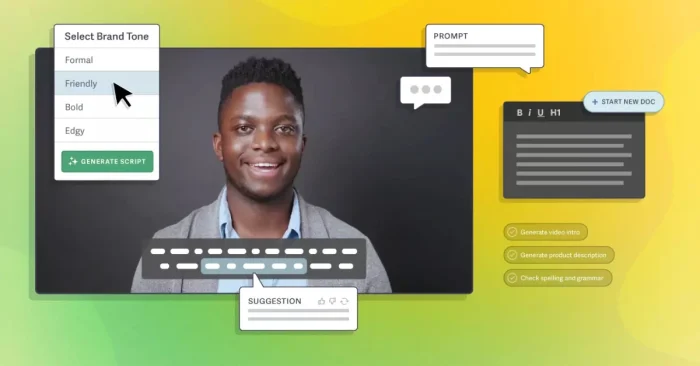
These tools analyze text scripts, create storyboards, generate visual elements, synthesize dialogues, and compile scenes into a complete video. The workflow often starts with parsing the script, then auto-generating scenes, and finally rendering with optional voiceovers. For a concise example of how this translates to short films, check out the AI Short Film Generator.
Why Are Script-to-Video Tools Important?
They let creators visualize concepts quickly, shorten pre-production timelines, and reduce costs across marketing, education, and entertainment projects. By turning scripts into testable sequences, teams can iterate on pacing, dialogue, and visuals before live shoots or animation production begins.
Key Features of AI Script to Video Tools
- Automatic storyboard generation from scripts.
- AI-generated characters, backgrounds, and props.
- Dialogue synthesis with realistic voiceovers.
- Scene composition and camera angle suggestions.
- Template-based video creation for genres or styles.
- Integration with editing and animation software.
- Real-time preview of scenes and sequences.
- Export in multiple video formats including HD and 4K.
Many platforms also offer integrations to streamline workflows across tools in our ecosystem, such as AI Tools for Video Creators to enhance production pipelines.
Who Uses AI Script to Video Tools?
Filmmakers, content creators, marketers, educators, and studios use these tools to convert scripts into videos efficiently.
Benefits and Limitations
Advantages: Reduces pre-production time, lowers costs, visualizes creative ideas quickly, and allows experimentation with different scenes.
Limitations: Generated visuals may not always match professional standards, and complex storylines may require manual adjustments. As AI advances, more nuanced controls and higher-fidelity outputs are becoming available, but human direction remains important for certain projects.
Industries That Benefit the Most
Film production, advertising, marketing, e-learning, and social media content creation benefit from AI script-to-video tools. See how these capabilities integrate with broader workflows in our article on AI Tools for Video Creators.
Best Practices for Using AI Script to Video Tools
- Provide well-structured scripts for accurate scene generation.
- Customize AI-generated characters and scenes for branding.
- Preview and adjust sequences to improve flow and pacing.
- Combine with AI voiceovers or music for full production.
- Use templates and genre presets for efficiency.
- Leverage narrative templates from AI video storytelling AI Tools to maintain narrative coherence.
Top 5 AI Movie Script to Video Tools
Below are five popular options as of 2026, each with different strengths in automation, customization, and output quality.
Runway
Generates video sequences from scripts using AI-assisted scene creation and character animations. For broader learning, see our overview of the AI Short Film Generator.
Plotagon
Converts written stories into animated videos with character dialogue and actions automatically generated. This workflow is similar to the AI Text Script Creator Tool approach, which automates script-to-content generation.
Movio
AI platform that transforms scripts into visual video scenes with AI characters, dialogues, and backgrounds. For a related cinematic workflow, see our piece on AI Cinematic Tools.
DeepBrain
Creates AI-generated video from scripts, providing voice synthesis, scene generation, and character animations.
Rephrase.ai
Generates personalized AI-driven video content from written scripts, including character actions and speech.
FAQs About AI Script to Video Tools
1. Can beginners use these tools?
Yes, they are designed to convert scripts into videos easily without advanced technical skills, and this remains true as of 2026.
2. Do these tools improve production speed?
Yes, they significantly reduce pre-production and video creation time by automating scene generation.
3. Are AI script-to-video tools expensive?
Some offer free trials or limited features, while full functionality typically requires a subscription or paid plan.
4. Can these tools replace professional filmmakers?
They help visualize and prototype scripts efficiently, but high-end films may still require professional direction and production.