Overview
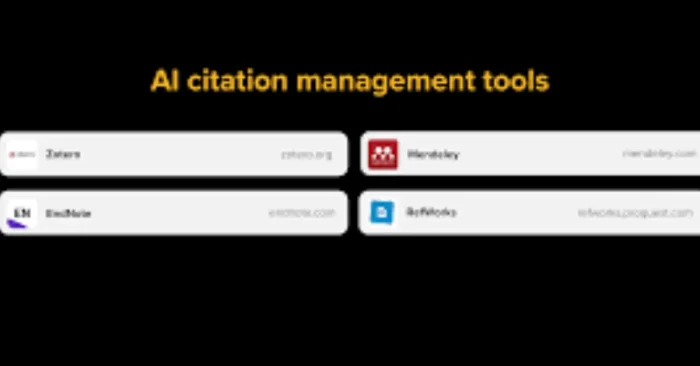
AI-powered citation management tools help students, researchers, and professionals organize, generate, and maintain reference lists with greater speed and accuracy. They support multiple citation styles such as APA, MLA, Chicago, and Harvard, and can automatically extract bibliographic details from papers, articles, or books. By integrating with writing platforms and cloud storage, these tools enable real-time collaboration across devices while ensuring consistency and reducing formatting errors. In addition to automatic formatting, features like plagiarism prevention and metadata validation enhance credibility and efficiency in academic and professional writing. For a broader overview, see AI tools for bibliography; workflows described in AI Tools for Research Papers emphasize structured writing and references to manage citations efficiently.
1. AI in Automatic Citation Generation
AI tools generate citations instantly by extracting details from URLs, DOIs, or uploaded files, while validating metadata against authoritative databases. This saves time and reduces human error. Students benefit by avoiding formatting mistakes, while researchers ensure their references are always accurate. Automation simplifies the otherwise tedious citation process. For a broader view of how these workflows integrate with research writing, see AI Tools for Research Papers.
2. AI for Multi-Style Formatting
AI citation tools support different referencing styles such as APA, MLA, Harvard, and Chicago. Users can switch between formats with a single click. This flexibility benefits academics working with journals, institutions, or publishers that require specific styles. Small mistakes in formatting are eliminated, ensuring professional accuracy. For an overview of how these tools manage style guidelines, see AI tools for bibliography.
3. AI in Reference Organization
AI citation managers allow users to store, tag, and categorize references in one place. By using cloud storage, researchers can access citations across multiple devices. Organized reference libraries make it easier to manage long research projects, theses, or collaborative papers efficiently. This centralized approach aligns with modern workflows described in AI tools for PhD students which emphasize scalable reference management for large projects.
4. AI for Collaboration
Many AI-powered citation management tools allow multiple users to collaborate on shared reference libraries. Research groups, academic teams, and students working on joint projects benefit from this feature. Collaboration ensures consistency and prevents duplication of effort in citation management. This collaborative approach is echoed in AI Journal Assistant Tools, which support team-based writing workflows.
5. AI in Integration with Writing Tools
AI citation tools integrate with platforms like Microsoft Word, Google Docs, and LaTeX, enabling automatic in-text citations and reference list generation. This reduces manual work and ensures seamless writing experiences. Researchers and professionals save time while producing well-structured documents. For related workflow guidance, see AI Tools for Research Papers.
6. AI for Metadata Extraction
AI can scan PDFs, books, or articles to extract bibliographic information such as author names, publication year, and journal titles. This prevents errors and speeds up data entry. Researchers handling large volumes of sources benefit the most from automated metadata extraction. This speeds up data entry, a capability described in AI tools for bibliography.
7. AI in Duplicate Detection
AI citation managers identify duplicate references within libraries and suggest merging them. This feature keeps research libraries clean and avoids confusion. Students, academics, and professionals maintain accurate and efficient reference lists without redundancy. Duplicate detection helps keep libraries clean, see AI tools for bibliography.
8. AI for Plagiarism Prevention
By ensuring proper citations, AI tools help reduce plagiarism risks. They highlight missing references and suggest corrections. Students benefit by maintaining academic integrity, while researchers and businesses avoid unintentional copyright issues. Proper citation builds credibility and trust in published work. Many tools provide plagiarism checks and fill gaps; see AI Journal Assistant Tools for related capabilities.
9. AI in Recommendation Systems
Some AI citation managers suggest related articles or references based on a user’s research topic. This helps researchers discover relevant sources quickly. Recommendation systems save time in literature review and expand access to valuable academic resources. Some AI tools offer related-article recommendations and can complement workflows described in AI Journal Assistant Tools.
10. AI for Real-Time Updates
AI citation tools update reference databases automatically to ensure accuracy. If an online article changes metadata or a DOI, AI refreshes the information in real-time. This keeps citations current and reliable, benefiting both students and professionals in dynamic research fields. Real-time synchronization and updates are increasingly integrated with broader AI tools like AI tools for bibliography.
(FAQs)
Q1: Can AI citation tools handle different citation styles?
Yes. Most AI citation tools support APA, MLA, Harvard, Chicago, and other major styles, allowing quick switching between formats.
Q2: Do AI tools integrate with Word or Google Docs?
Yes. Many AI citation managers integrate with writing software to automate in-text citations and bibliographies.
Q3: Are AI citation tools free to use?
Some tools offer free versions with limited features, while advanced options require subscriptions for full functionality.