Overview
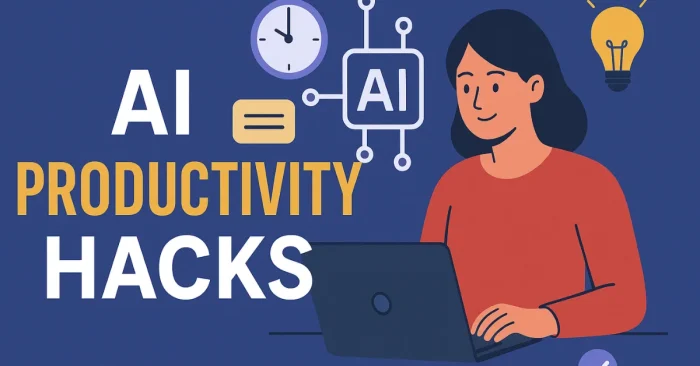
AI tools for productivity hacks help individuals and businesses save time, automate repetitive tasks, and focus on essential goals. These tools use artificial intelligence to optimize workflows, manage priorities, and suggest smarter ways of working. From writing assistance to project management, they reduce manual effort and increase efficiency. By analyzing user habits, AI provides personalized recommendations that enhance performance and cut distractions. As of 2026, AI-powered productivity tools continue to evolve, offering smarter automation and deeper insights. For a practical overview of how these tools can transform workflows, see our guide on AI productivity tools. Whether for students, freelancers, or corporate teams, AI-powered productivity hacks bring speed, clarity, and structure. They make complex tasks easier, helping users accomplish more with less effort while maintaining a better work-life balance.
1. Automated Task Management
AI tools manage to-do lists and deadlines by organizing tasks automatically. They prioritize based on urgency and importance, helping users stay on track without manual planning. This approach aligns with what we cover in our guide on AI tools for task automation.
2. Smart Email Filtering
AI filters emails by importance, flagging priority messages and reducing spam. This minimizes distractions and allows users to focus only on relevant communication.
3. Writing Assistance
AI-powered writing tools help draft emails, reports, or blog posts quickly. They improve grammar, tone, and clarity, saving time while maintaining professional communication. For a broader take on how these tools fit into productivity workflows, see our article on AI productivity tools.
4. Workflow Automation
AI connects different apps and automates repetitive processes like data entry. This reduces errors, boosts productivity, and frees up time for more meaningful work. See also our guide on AI tools for task automation.
5. Focus Optimization
AI apps recommend focus intervals and break schedules. By analyzing user behavior, they help maintain consistent energy and avoid burnout throughout the day. For more focus strategies, see our guide on AI productivity tools.
6. Meeting Summarization
AI records and summarizes meetings, highlighting key decisions and tasks. This ensures better follow-ups without wasting time on lengthy notes or recordings. Learn more in our article on AI tools for time management.
7. Personalized Insights
AI tools analyze work patterns and provide tailored suggestions. They recommend smarter habits to improve time use, ensuring higher efficiency in daily activities. Learn more in our piece on AI Tools For Productivity.
8. Collaboration Enhancement
AI boosts teamwork by syncing tasks, scheduling meetings, and assigning responsibilities. It ensures smooth coordination among team members, reducing miscommunication and delays. For more on enabling collaborative work, check our guide to AI productivity tools.
9. Document Summarization
AI tools condense lengthy documents or research into key points. This saves hours of reading time and allows users to grasp important details quickly. For a broader look at how AI supports overall productivity, explore our guide on AI productivity tools.
10. Calendar Optimization
AI schedules meetings at the most productive times, avoiding conflicts. It aligns calendars with goals, ensuring users maximize their time for priority activities. This complements our guidance in the article on AI tools for time management.
(FAQs)
Q1: Can AI productivity tools replace human planning?
No, they enhance human planning by reducing manual work and offering suggestions, but decision-making remains with the user.
Q2: Are AI productivity hacks helpful for students?
Yes, students benefit from task scheduling, study reminders, and summarization tools to stay organized and focused on academics.
Q3: Do AI tools work across devices?
Most AI tools sync across devices, ensuring smooth workflow whether on a computer, tablet, or smartphone.
Learn More About AI Course AI Course details