
Dust and debris can quietly wreak havoc on your engine, even if you don’t drive through a desert or face a dust storm. These particles can creep into your car’s systems and cause a range of problems. Here are practical steps to protect your engine from airborne hazards.
How Dust and Debris Harm Your Engine
When your intake system brings in air, it also brings in dust, sand, and other harmful substances. Over time, the build-up of these substances can:
- Block the heat transfer area of the radiator, making it harder for your engine to cool down
- Erode the piston ring, cylinder sleeve, and bearings
- Combine with oil to make an abrasive compound that can damage all parts of the engine
Since it’s the air filter’s job is to catch these particles, you may think that you don’t have to worry about them. While an air filter helps keep your engine clean, not all air filters are created equal, and they certainly don’t last forever.
Upgrade Your Air Filter
One easy step you can take to protect your car from airborne hazards is to install a better air filter. A new 2500 Dodge Ram air filter will catch far more dirt than the one that came with your truck.
Air filters are inexpensive and easy to install, so it’s smart to replace them often rather than risk damage to your engine. Most manufacturers recommend a replacement at least once per year or 12,000 miles. In dusty or desert conditions, replacing the filter every 6,000-8,000 miles can help stay ahead of wear.
As a bonus, replacing your air filter improves your car’s emissions and fuel efficiency. Installing a new 2005 Toyota Prius air filter is one of the easiest, cheapest ways to get even more mileage out of a Prius. Regular maintenance helps you avoid the real costs of neglect. Learn about the real cost of skipping regular car maintenance.
Don’t know how to replace your air filter? It’s a simple task anyone can do in minutes. Here’s a quick step-by-step guide:
- Make sure to buy the right air filter for your car or truck. An employee will point you to the correct model if you’re unsure.
- Find the air filter box under the hood. It’s a plastic box on top of your engine with an air hose attached. It shouldn’t be hard to locate.
- Open the air filter box and remove the old filter.
- Place the new filter in, making sure it’s positioned like the one you just took out.
- Close the air filter box.
Clean Your Engine
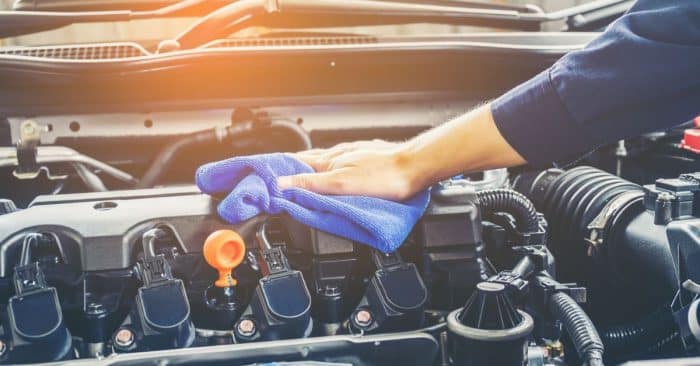
After you’ve replaced your air filter, you should clean your engine to remove any dirt that has accumulated inside. Cleaning your engine doesn’t have to be an all-day project. For added protection, some drivers use engine oil additives as part of their maintenance routine, and a misting cooling system can also help maintain temperature control. purple fuel to your gas tank will work its way through your engine and clean it for you.
The effects of poor cooling and dust erosion on your engine can be catastrophic. Nip the problem in the bud by replacing your air filter and giving your engine an easy deep clean. For additional guidance on extending your car’s longevity, see our guide on extending your car’s longevity.