
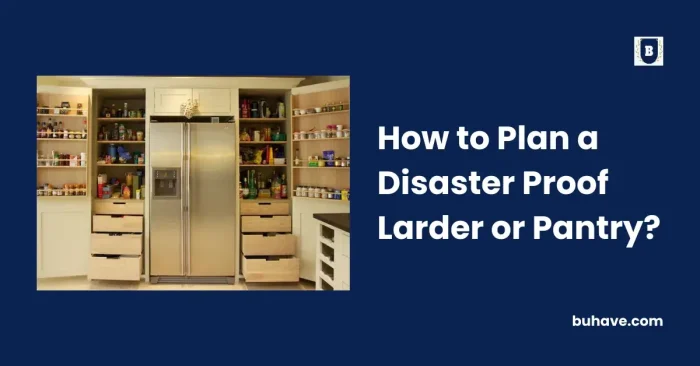
Having the right dry ingredients and safe storage can help your family weather winter. Here are the essential items you should have on hand to do so.
Planning a full pantry or larder is one thing, but could what you have in there right now keep you going through a disaster? For practical ideas on kitchen essentials, see Five Must-Have Kitchen Essentials for Every Home Cook.
One thing people learned through Covid-19 was how to hone our preparation skills.
Humanity now realizes that disaster is only ever a single sleep away. As such, we need to prepare for situations that might arise from it. This article explores how you can plan a larder or pantry that can see you through the winter, the wildfire, or the drought. For practical tips on organizing and planning meals, How to Organize and Prepare a Multi Course Meal.
Planning a Pantry: What do you use?
The first stage of planning a pantry is to identify the things you use most of. An ordinary family of four might use potatoes twice a week, rice twice a week, noodles, and two or three loaves of bread. Once you have listed what you use most of, you must see if you are making it the most effective way. Is it cheaper to make the bread and therefore easier to store the dry ingredients over winter? Bread cannot last long term without a freezer.
Let’s also review that your larder and pantry are exclusively for food. There should be no contaminations, not even clean ones. Do not store your soap making supplies beside your dried pasta. It will ruin the taste of your Bolognese. For additional guidance on practical kitchen essentials, see Five Must-Have Kitchen Essentials for Every Home Cook.
Planning a Disaster Proof Pantry: Suggested Items to Stock
Try stocking the following raw ingredients with enough portions for a winter period. Think of your stock as home essentials for 2023: 8 Home Essentials That You May Need This 2023.
- Flour
- Onions and Potatoes
- Garlic and dried herbs
- Pasta
- Cooking oil of your choice
- Stock cubes
- Rice
- Tinned goods
- Dried meats
- Preserves
- Yeast
- Dried fruits
- Pickled vegetables
- sugar
Plan to stock your larder or pantry with goods which will last a long time. You need to store these items correctly. Consider the flour and garlic situation. Old country homes had both a larder, where you stored your dried goods, and a pantry. The pantry was smaller, usually a cupboard in the kitchen, where the temperature was harder to regulate. This made it the best place for brewing alcohol, storing wet foods, and hanging meats. Cold goods would go underground for long term storage. For more on efficient kitchen setup, see Essential Elements of a Well-Planned Small Kitchen Renovation.
How to store flour long term?
Flour is an important basic of your larder. It should be in a dry, dark place, and away from strong odors or flavors. Store your flour next to your garlic comfit and you will soon have cakes that taste distinctly herbal. Flour is a staple for pastry, bread, cakes, pies, and all sorts of mid-winter feasts. See this guide for more advice on how to store flour long term.
For more on organizing your kitchen and planning storage, see Essential Elements of a Well-Planned Small Kitchen Renovation.
What About Portions?
Just as you need to identify what you use most, you must then work out how many portions of that one item you need in a month. Once calculated, the next step is multiplying that amount by the months you need to get through. In the case of winter, a 5/6 month store is wise. Plan to stock the final figure. Maintaining levels from then on is enough to get you through any disaster.