During the pandemic, when people were limited to their homes, they spent their time reading, eating, and streaming. It was during this time that they started investing in high-end entertainment products, boosting the trends in the home entertainment industry.
In the past few years, there has been an impeccable advancement in home technology, from 4k Ultra HD TVs to smart speakers and VR headsets, etc. As technology evolves rapidly, there are so many exciting trends to watch out for.
In this article, we will discuss some of the promising trends and predictions for the future of home entertainment and what they mean for consumers.
Immersive Experience with VR and AR
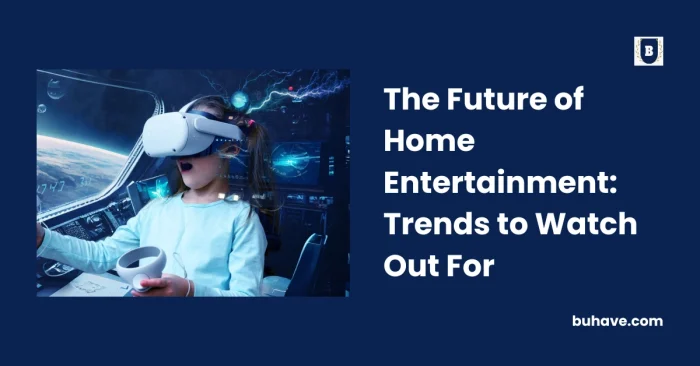
Augmented and virtual reality is gaining traction in almost all fields of technology these days. Augmented and virtual reality technologies are expected to transform the way we experience entertainment in the home. Augmented reality overlays digital content in the real world, while virtual reality creates a completely immersive environment, allowing you to experience a non-physical world.
We can expect more VR and AR in home entertainment, from interactive gaming experiences to virtual movies. For example, you may be able to watch a film in virtual reality where you are fully immersed in the story and are able to move around the set. Also, you may be able to attend virtual concerts where you can interact with other fans and take pictures with performers.
This trend is increasingly shaping how we consume media at home and aligns with insights from The Evolution of Live Concerts, which explores how technology is transforming live events.
However, to benefit from cutting-edge technology, people, home entertainment enthusiasts, need to switch to a high-end internet option. In this regard, CenturyLink internet is one of the best options to pace up with your mushrooming internet needs. It offers up superfast speed and that too at an affordable price. So, choose the right option and immerse yourself in the future.
AI integration
Artificial intelligence is a game-changing technology that has already taken the world by storm. Our homes, workplaces, and all facilities have transformed with AI, with automated practices that would otherwise need human assistance and supervision.
In essence, AI is expected to advance home entertainment by providing convenience and access to vast entertainment options. AI tools for smart homes extend voice control and device automation, making it easier to manage playlists, lighting, and speakers with simple commands.
In future, we can expect even more advanced voice control and integration with other smart home devices. It is expected that we may see home entertainment systems that can recognize individual users and personalize content based on their preferences. For example, a system might automatically adjust the volume or even recommend content based on their viewing habits.
Personalized Content Recommendations
This is tightly linked with AI: advanced AI analyzes data from streaming platforms and other tools to anticipate what you might want to watch next.
With the rising popularity of streaming, there is a growing demand for personalized content recommendations. AI and ML insights help streaming services tailor suggestions based on viewing history.
For example, a streaming service may recommend a comedy movie when you are feeling down or suggest a new series based on your previous viewing history. As these algorithms become more advanced, they may even be able to predict what we want to watch.
Advanced Display Technology
Display technology has evolved impressively over the years, with 4K Ultra HD TVs becoming increasingly common in homes around the world. In the future, we can expect even more advancements in display technology which include higher resolutions and improved color accuracy. It is expected that we may see the rise of 8K resolution TVs, which offer four times the pixel density of 4K, resulting in even sharper, more detailed images. This progress also influences other media formats, including the future of visual effects in film, as discussed in The Future of Visual Effects in the Film Industry.
A Complete Shift Towards Streaming
Recently, streaming services like Netflix, Amazon Prime Video, and Disney+ have become increasingly popular, with many consumers cutting traditional cable. The shift toward streaming has accelerated in recent years and is likely to continue as platforms expand libraries and add live TV options.
As streaming services invest in original content, we may see a continued move away from traditional TV networks toward online platforms. This could be a major implication for the entertainment industry, as streaming services become more dominant in the market. For broader context on connectivity’s role in streaming, see Here’s How Internet Solves Half of Real-World Problems.
Final Thoughts
The future of home entertainment remains exciting, with immersive experiences, smarter controls, and personalized recommendations becoming more prevalent in daily living.
As display tech advances and streaming becomes the default, the entertainment industry is likely to see continued disruption and new business models. For broader context on media technology trends, see The Future of Visual Effects in the Film Industry.
– If you are looking for guest posts in entertainment “write for us” now.