Overview
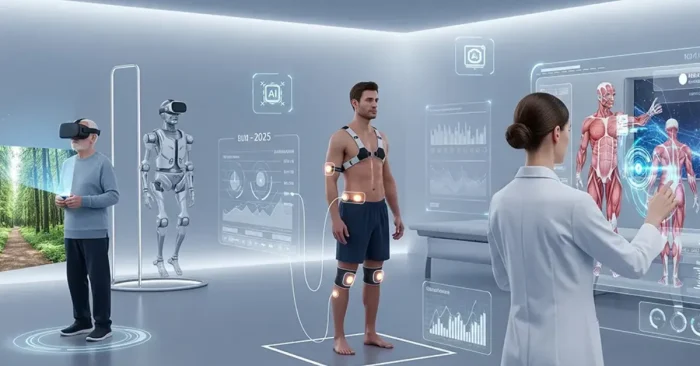
AI tools for rehabilitation exercises are transforming physical therapy and recovery by providing personalized, data-driven guidance for patients and therapists. These tools use artificial intelligence, motion tracking, and machine learning to monitor movement, evaluate progress, and suggest optimized exercises tailored to individual needs. As of 2025, AI-powered platforms have become a standard in many clinics, enhancing remote monitoring and telehealth-enabled care. For a broader view of how these tools are reshaping rehab, see our overview of AI tools for physiotherapy.
AI can analyze posture, range of motion, and strength during rehabilitation sessions, providing real-time feedback to ensure exercises are performed correctly and safely. Widely used in hospitals, physiotherapy clinics, and home rehabilitation programs, AI-powered platforms have become standard in many clinics by 2025, enhancing recovery efficiency, reducing injury risks, and supporting therapists in designing evidence-based treatment plans. By integrating AI, rehabilitation becomes more engaging, precise, and effective, helping patients regain mobility, strength, and independence faster.
1. Physitrack – AI Rehabilitation Platform
Physitrack leverages AI to create personalized exercise programs for patients undergoing rehabilitation. AI algorithms monitor patient progress, provide corrective feedback, and adjust exercise difficulty dynamically. The platform integrates with wearable sensors to track movements and ensure proper technique. By using Physitrack, therapists can enhance patient engagement, improve recovery outcomes, and optimize rehabilitation workflows. This approach is also discussed in our AI tools for physiotherapy overview.
2. Kaia Health – AI-Powered Physiotherapy
Kaia Health uses AI to guide patients through rehabilitation exercises for musculoskeletal conditions and chronic pain. Its AI algorithms analyze movement via smartphone cameras or sensors, offering real-time feedback to correct posture and technique. Kaia Health delivers personalized therapy programs, tracks progress, and motivates patients to adhere to exercise routines, improving recovery speed and reducing pain. For broader movement analysis capabilities, see our AI tools for workout tracking.
3. Reflexion Health – AI Motion Analysis
Reflexion Health applies AI to monitor rehabilitation exercises using motion capture technology. AI algorithms evaluate range of motion, movement quality, and adherence to prescribed routines. The platform provides actionable feedback and progress reports to patients and therapists. By integrating AI, Reflexion Health ensures effective therapy, reduces risk of re-injury, and enhances overall rehabilitation outcomes. See our AI tools for physiotherapy overview for more context.
4. Sword Health – AI Virtual Physical Therapy
Sword Health combines AI with wearable sensors to deliver virtual physical therapy programs. AI algorithms analyze patient movements, provide real-time guidance, and track adherence to exercises. The platform personalizes rehabilitation plans and offers data-driven insights to therapists. Sword Health improves patient engagement, optimizes therapy effectiveness, and accelerates recovery in both clinical and home settings. For broader program management strategies, see our AI tools for wellness program management.
5. Neurofenix – AI Stroke Rehabilitation
Neurofenix uses AI-enabled robotic devices to assist stroke patients in regaining motor function. AI algorithms track movement patterns, adjust exercise difficulty, and provide visual feedback to encourage proper technique. The platform enhances neurorehabilitation by improving engagement, ensuring consistent therapy, and accelerating recovery outcomes for patients recovering from neurological injuries. For broader insights into neurorehabilitation AI, see our AI tools for athlete performance article.
6. Vioscreen – AI Rehabilitation Monitoring
Vioscreen applies AI to track rehabilitation exercises and patient progress remotely. The platform uses video analysis and sensor data to evaluate movement quality, compliance, and improvement. AI-driven insights allow therapists to adjust treatment plans in real-time. By leveraging Vioscreen, rehabilitation programs become more personalized, efficient, and effective, helping patients recover faster with continuous guidance. For broader program management strategies, see our AI tools for wellness program management.
7. RehaCom – AI Cognitive and Physical Rehab
RehaCom integrates AI for cognitive and physical rehabilitation, offering interactive exercises to improve motor skills, coordination, and cognitive function. AI algorithms analyze performance, adapt difficulty levels, and provide feedback for optimal outcomes. The platform is used in therapy for neurological conditions, injuries, and post-surgical recovery, enhancing engagement and therapy effectiveness. For a broader physiotherapy overview, see our AI tools for physiotherapy.
8. Kaiku Health – AI Patient Engagement
Kaiku Health uses AI to support rehabilitation adherence and exercise monitoring. The platform tracks patient-reported outcomes, evaluates exercise performance, and provides personalized guidance. AI-driven analytics help therapists adjust rehabilitation plans, improve patient compliance, and accelerate recovery. By integrating AI, Kaiku Health ensures efficient, data-driven rehabilitation management. For related guidance, see our AI tools for fitness trainers.
9. MindMaze – AI Neurorehabilitation
MindMaze combines AI with virtual reality to facilitate neurorehabilitation exercises. AI algorithms monitor patient movement, provide real-time feedback, and adapt exercises to individual progress. The platform engages patients in immersive therapy, enhancing motor recovery, cognitive rehabilitation, and therapy adherence. AI integration supports efficient rehabilitation for neurological conditions and injuries. For broader insights into neurorehabilitation AI, see our AI tools for athlete performance article.
10. PT Pal – AI Physical Therapy Assistant
PT Pal leverages AI to deliver guided rehabilitation exercises and track patient performance. AI algorithms analyze movement accuracy, provide corrective feedback, and generate progress reports for therapists. The platform supports personalized exercise programs, remote monitoring, and patient engagement, improving rehabilitation outcomes and workflow efficiency in clinical and home settings. For patient engagement strategies in rehab, see our AI tools for wellness program management.
(FAQs)
Q1: How do AI tools enhance rehabilitation exercises?
AI tools monitor movements (AI tools for physiotherapy), provide real-time feedback, personalize exercise programs, and track progress, ensuring effective, safe, and optimized rehabilitation outcomes.
Q2: Are AI rehabilitation tools suitable for home use?
Yes, platforms like Physitrack, Kaia Health, and Sword Health are designed for remote monitoring, enabling patients to perform exercises at home with AI guidance and therapist oversight. See our remote monitoring overview for more context.
Q3: Can AI tools improve recovery speed?
Absolutely, AI tools provide personalized feedback, optimize exercise difficulty, and ensure adherence, helping patients recover mobility, strength, and function more efficiently. For related insights, visit our AI tools for physiotherapy overview.
Learn More About AI Course AI Course