Ocean Vuong – Biography
Early Life and Background
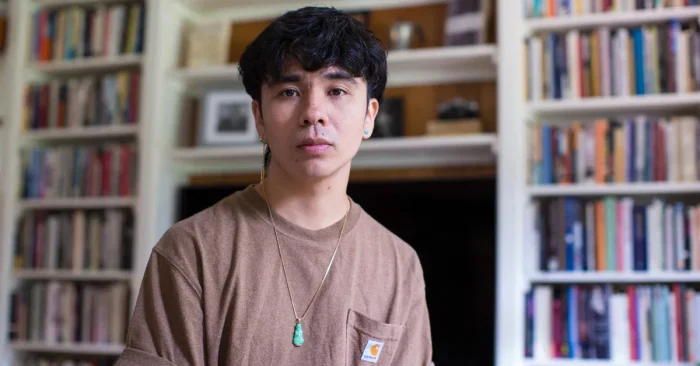
Ocean Vuong was born on October 14, 1988, in Saigon, Vietnam. At two years old, he immigrated with his family to the United States as refugees following the Vietnam War. They eventually settled in Hartford, Connecticut, where Vuong was raised in a working-class household led primarily by women—his mother, grandmother, and aunt. English was not spoken at home, and Vuong did not learn to read until the age of eleven. Despite this, his fascination with words grew, shaped by his experiences of cultural displacement and family trauma. These early struggles and observations would later define his deeply personal and lyrical writing style. Vuong pursued higher education at Brooklyn College and earned his MFA in poetry from New York University, where his voice as a writer continued to evolve. Since then Vuong has become one of the defining voices of contemporary poetry and prose, influencing a generation of readers and writers. Toni Morrison biography.
Literary Breakthrough and Success
Vuong’s breakthrough came in 2016 with the release of his debut poetry collection, Night Sky with Exit Wounds. The book earned widespread critical acclaim for its exploration of identity, grief, queerness, and exile, and won the T.S. Eliot Prize, the Whiting Award, and several other honors. His poems are known for their raw emotion and delicate language, often blurring memory and metaphor while tying personal pain to historical context. In 2019, Vuong published his debut novel, On Earth We’re Briefly Gorgeous, a fictionalized letter from a Vietnamese-American son to his illiterate mother. The novel became a New York Times bestseller and drew praise for its emotional depth and lyrical prose. Vuong’s work sits among contemporary voices reshaping diaspora storytelling, a trajectory further explored in the Toni Morrison biography.
Writing Themes and Style
Vuong’s work is rooted in his identity as a queer, Vietnamese-American writer and explores topics such as immigration, trauma, love, violence, and generational memory. His writing style is highly lyrical and meditative, with an emphasis on rhythm and imagery. He often employs fragmented structures that mirror the emotional complexities of his subjects. Whether writing poetry or fiction, Vuong’s language is both delicate and powerful, inviting readers to sit with vulnerability and silence. He challenges conventional storytelling by blending poetic form with narrative detail, often confronting themes of war and personal loss with grace and nuance. His words resonate especially with readers navigating the intersections of identity and culture. For readers curious about how other writers tackle these themes, see the Ta-Nehisi Coates biography.
Academic and Public Influence
In addition to his writing, Vuong is also a respected educator. He serves as an assistant professor in the MFA Program for Poets & Writers at the University of Massachusetts Amherst. There, he teaches poetry and mentors young writers, particularly those from marginalized backgrounds. Vuong is a frequent speaker at universities, literary festivals, and public forums, discussing literature, representation, and the immigrant experience. Through his teaching and public engagement, Vuong promotes language as a tool for healing and connection and champions greater diversity in literature and academia. His approach echoes broader discussions about authorial influence and public life, as illustrated in the Ian McEwan biography.
Personal Life and Identity
Ocean Vuong is openly gay and has been candid about his experiences growing up as a queer person in a conservative immigrant family. His identity is central to his writing and public voice. Vuong’s work often draws from his relationships, his mother’s struggles as a refugee and nail salon worker, and the broader complexities of living between cultures. In 2019, Vuong’s mother passed away after a battle with breast cancer, a loss that deeply affected him and informed his 2022 poetry collection, Time Is a Mother. While Vuong maintains a relatively private personal life, his writing continues to serve as a window into his emotional world, marked by love, grief, and the pursuit of meaning. For readers seeking broader perspectives on identity and history, see the Ta-Nehisi Coates biography.
Legacy and Cultural Significance
Ocean Vuong’s influence on contemporary literature is profound. Through both his poetry and prose, he has reshaped how stories of diaspora, queerness, and trauma are told. His work resonates with a broad audience, especially among young readers seeking to understand their own experiences through literature. Vuong’s contributions have made him a leading voice in American letters, with his books taught in academic settings and widely discussed in literary circles. As both an artist and teacher, he continues to inspire a new generation of writers to embrace vulnerability, complexity, and beauty in their craft. Vuong’s legacy is not just in what he writes, but in how he makes space for others to do the same. You can explore related discussions in the Ta-Nehisi Coates biography as part of the same literary conversation.
Frequently Asked Questions
What is Ocean Vuong known for?
Ocean Vuong is best known for his poetry collection Night Sky with Exit Wounds and his debut novel On Earth We’re Briefly Gorgeous, both of which have received critical acclaim. For a wider sense of contemporary biographical profiles, see the Frank Ocean biography.
What are the main themes in Vuong’s writing?
Vuong explores themes such as identity, queerness, war trauma, grief, immigration, and family history, often through a deeply personal and lyrical lens.
What awards has Ocean Vuong received?
He has won the T.S. Eliot Prize, Whiting Award, MacArthur Fellowship, and several other literary honors for his work in poetry and fiction.
Where does Ocean Vuong teach?
Ocean Vuong is an assistant professor at the University of Massachusetts Amherst, where he teaches in the MFA Program for Poets and Writers.
How does Vuong’s personal background influence his work?
Vuong’s background as a queer Vietnamese-American immigrant shapes his writing, allowing him to explore themes of cultural identity, displacement, and resilience with emotional depth and nuance.