
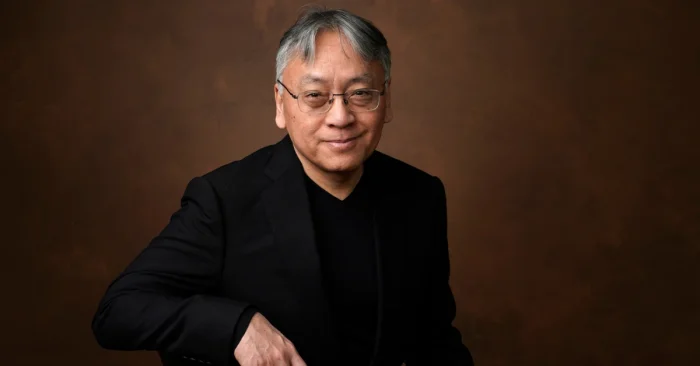
Kazuo Ishiguro – Biography
Early Life and Education
Kazuo Ishiguro was born on November 8, 1954, in Nagasaki, Japan. When he was five years old, his family moved to the United Kingdom, where he would grow up and later build his literary career. Ishiguro’s upbringing was shaped by the blend of his Japanese heritage and British culture, a duality that subtly influences much of his writing. He attended the University of Kent, earning a Bachelor of Arts in English and Philosophy. Later, he pursued a Master of Arts in Creative Writing at the University of East Anglia, where he studied under renowned writers such as Malcolm Bradbury. Ishiguro’s early exposure to different cultures and his academic background laid a strong foundation for his distinctive literary voice.
Literary Career and Major Works
Kazuo Ishiguro established himself in contemporary literature with his debut “A Pale View of Hills” (1982). His breakthrough arrived with the 1989 novel “The Remains of the Day,” which won the Booker Prize and earned him international recognition. The novel examines memory, duty, and repression through the reflections of an English butler. Ishiguro’s fiction continues to rely on restrained, unreliable narration to probe memory, guilt, and identity. Later works like “Never Let Me Go” (2005) fuse speculative elements with ethical questions, while “An Artist of the Floating World” (1986) earned critical praise for its portrait of postwar Japan. Collectively, his books are noted for elegant prose, emotional subtlety, and a persistent interest in how memory shapes self-understanding. This approach has influenced contemporaries such as Ian McEwan.
Style and Themes
Ishiguro’s writing style is often described as calm and restrained, yet deeply moving. He frequently uses first-person narration to delve into the psyche of his characters, revealing their struggles with the past, guilt, and self-deception. Themes of memory, loss, and the passage of time recur throughout his work. His narratives often question how individuals reconcile with their histories and the compromises they make. Ishiguro’s subtle exploration of moral ambiguity and identity has made his novels resonate with readers worldwide. His ability to blend literary fiction with elements of genre, such as dystopia or historical fiction, distinguishes his work within modern literature. Similar to Orhan Pamuk and Salman Rushdie, his narratives cross literary genres to examine memory and the self.
Awards and Recognition
Throughout his career, Kazuo Ishiguro has received numerous awards and honors. Aside from the Booker Prize for “The Remains of the Day,” he was awarded the Whitbread Book of the Year Award for “An Artist of the Floating World.” In 2017, Ishiguro was awarded the Nobel Prize in Literature for his novels which, in the words of the Swedish Academy, “uncovered the abyss beneath our illusory sense of connection with the world.” His works have been adapted into films and stage productions, further cementing his impact on literature and culture. Ishiguro’s recognition extends beyond literary circles, marking him as one of the most influential writers of his generation. The Nobel Prize in 2017 drew renewed attention to his entire body of work.
Personal Life and Influence
Kazuo Ishiguro lives in London with his family and maintains a private personal life. Beyond writing, he has contributed to the literary world as a screenwriter and songwriter, showcasing his creative versatility. His cross-cultural background and experiences as an immigrant inform his nuanced portrayal of identity and belonging. Ishiguro’s influence can be seen in a wide array of contemporary writers, including Ocean Vuong. He remains a prominent figure in literature, known for his thoughtful examination of human nature and memory.
Frequently Asked Questions
What is Kazuo Ishiguro famous for?
Kazuo Ishiguro is best known for his novels “The Remains of the Day” and “Never Let Me Go,” which explore themes of memory, identity, and human emotion.
Has Ishiguro won any major awards?
Yes, Ishiguro won the Booker Prize in 1989 and the Nobel Prize in Literature in 2017, among other prestigious honors.
What themes does Ishiguro explore in his writing?
His writing often explores memory, loss, identity, moral ambiguity, and the passage of time.
Where was Kazuo Ishiguro born?
He was born in Nagasaki, Japan, and moved to the United Kingdom at a young age.
Are any of Ishiguro’s works adapted into films?
Yes, “The Remains of the Day” and “Never Let Me Go” have both been adapted into acclaimed films.