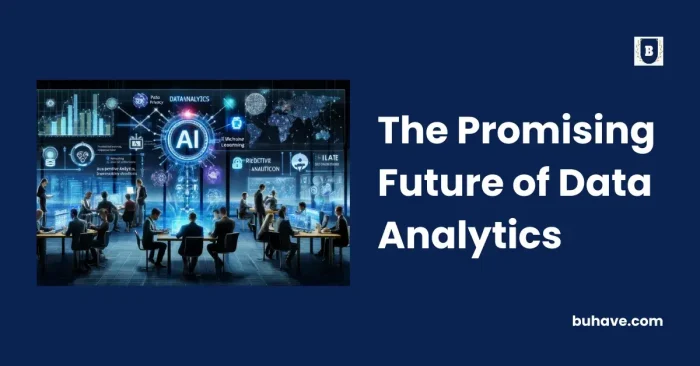
Data analytics has emerged as a powerful tool in the modern world, revolutionizing industries and driving significant advancements in various domains. With the exponential growth of data and the increasing demand for data-driven insights, the future of data analytics appears incredibly promising. This blog post explores the exciting prospects, ongoing developments, and potential breakthroughs shaping the road ahead in data analytics.
Artificial Intelligence and Machine Learning Integration
Artificial intelligence (AI) and machine learning (ML) are set to play a pivotal role in the future of data analytics. As AI algorithms become more sophisticated and ML models more accurate, the ability to analyze complex data sets and generate valuable insights will be greatly enhanced. AI-powered analytics systems can automatically process vast amounts of data, uncover patterns, and make predictions at a scale and speed that would be impossible for humans alone. AI and ML integration into data analytics will streamline processes, improve accuracy, and enable organizations to make more confident data-driven decisions. For a broader perspective on how AI and ML are evolving in analytics, see the future of artificial intelligence and machine learning.
Predictive and Prescriptive Analytics
While descriptive and diagnostic analytics have been the primary focus in the past, the future of data analytics lies in predictive and prescriptive analytics. Predictive analytics leverages historical data and statistical modeling techniques to forecast future trends and behaviors. It enables organizations to anticipate customer needs, optimize operations, and make proactive decisions. On the other hand, prescriptive analytics takes predictive analysis further by providing actionable recommendations and strategies to achieve desired outcomes. By harnessing the power of advanced analytics techniques, businesses can obtain a competitive edge and drive innovation in their respective industries. For example, in the pharmaceutical industry, predictive analytics are used to optimize trial design and patient recruitment.
Data Privacy and Ethical Considerations
As data analytics evolves, ensuring data privacy and addressing ethical concerns will become increasingly important. With the General Data Protection Regulation (GDPR) and other data protection laws in place, organizations must prioritize data security and transparency. The future of data analytics will see the development of robust frameworks and technologies that protect individuals’ privacy while enabling valuable insights to be derived from data. Ethical considerations, such as fairness, accountability, and transparency, will shape the data’s collection, analysis, and use for decision-making. For IT professionals and organizations looking to navigate governance and analytics ethics, the importance of learning business analytics for IT professionals underscores essential skills for responsible practice.
Augmented Analytics
Augmented analytics combines the power of AI, ML, and natural language processing (NLP) to empower business users with easy-to-use tools that can analyze data and generate insights without the need for specialized data science skills. This democratization of data analytics will enable a broader range of users within organizations to harness the power of data to make better decisions. Natural language interfaces allow users to ask questions in plain language and receive meaningful insights in real-time, eliminating the barrier between business users and data analysis. For example, AI tools for business intelligence illustrate how these capabilities translate into practical, user-friendly applications.
Internet of Things (IoT) and Edge Analytics
The proliferation of the Internet of Things devices generates massive volumes of data at the edge of networks. The future of data analytics will leverage edge computing and edge analytics to process and analyze data closer to its source. Organizations can reduce latency, improve real-time decision-making, and optimize bandwidth usage by moving data analytics capabilities to the edge. Edge analytics also enhances data security and privacy by minimizing the need to transfer sensitive data to central data centers. This topic is closely related to broader Big Data discussions, such as those outlined in Big Data – How to Embrace the Power of Innovation.
Conclusion
As organizations continue to embrace data-driven decision-making, the future of data analytics will play a crucial role in driving innovation, improving efficiency, and unlocking new opportunities across industries. By harnessing the power of data, organizations can gain a competitive advantage and navigate the complexities of a rapidly evolving business landscape. For practical paths to upskill, see AI tools for business intelligence.
You can enroll in the best data analytics courses online to gain a deeper understanding of the field and become proficient in data analytics. These courses offer comprehensive instruction on various data analysis techniques, tools, and technologies. By acquiring these skills, you can harness the immense potential of data and make well-informed decisions within your respective industry. Additionally, to see how AI and ML are shaping analytics, read the future of artificial intelligence and machine learning.